| HS Code | 773534 |
| Density | 1.04 g/cm³ |
| Melt Flow Rate | 8 g/10 min (200°C, 5 kg) |
| Tensile Strength | 45 MPa |
| Flexural Strength | 70 MPa |
| Impact Strength | 12 kJ/m² |
| Elongation At Break | 2.5% |
| Vicat Softening Temperature | 102 °C |
| Heat Deflection Temperature | 85 °C |
| Rockwell Hardness | M75 |
| Light Transmittance | 90% |
As an accredited General‑Purpose Polystyrene GPPS‑500 factory, we enforce strict quality protocols—every batch undergoes rigorous testing to ensure consistent efficacy and safety standards.
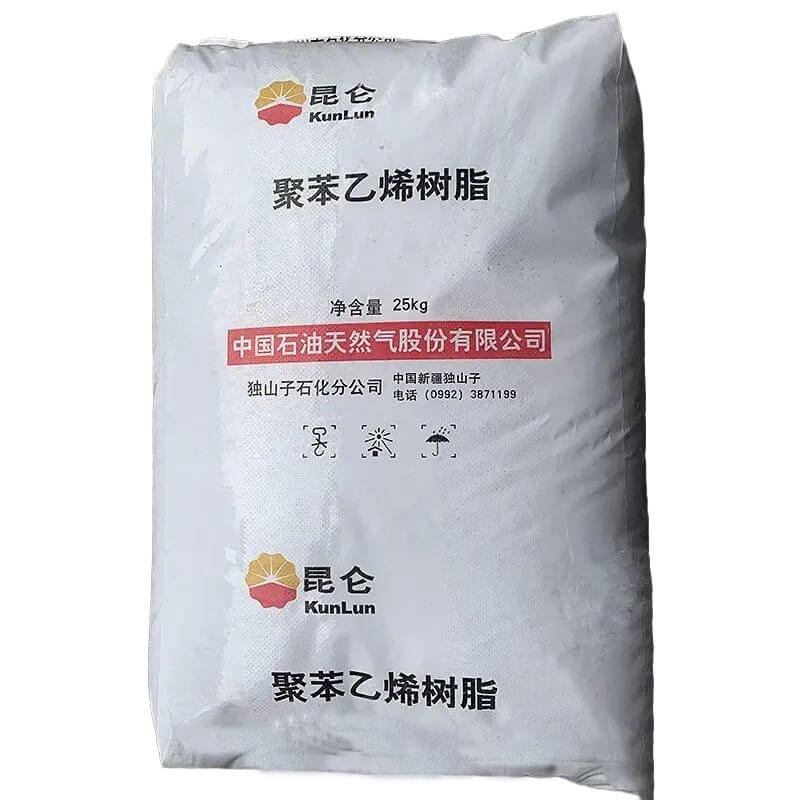
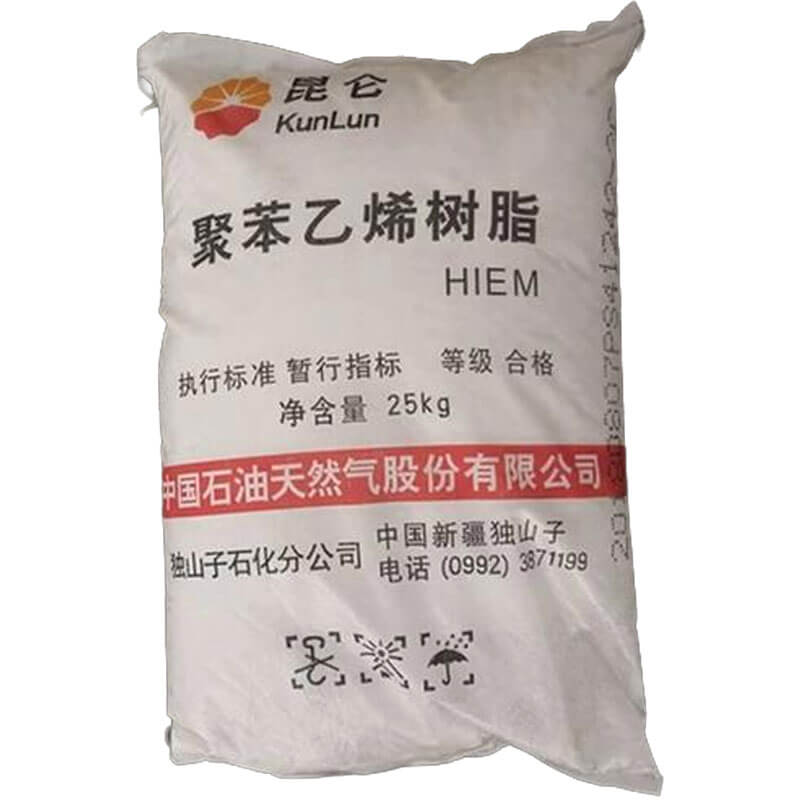
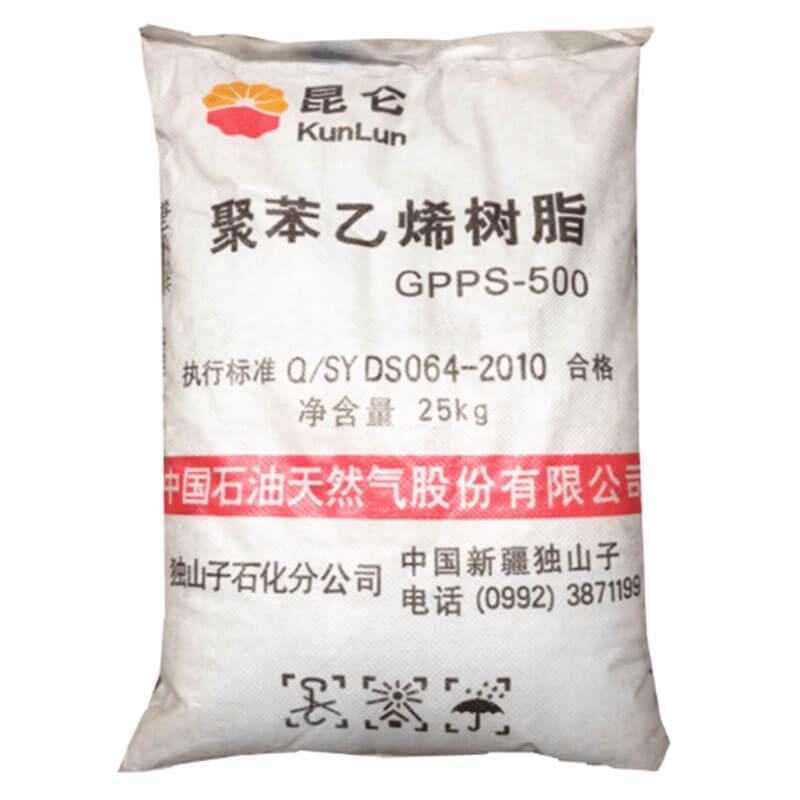
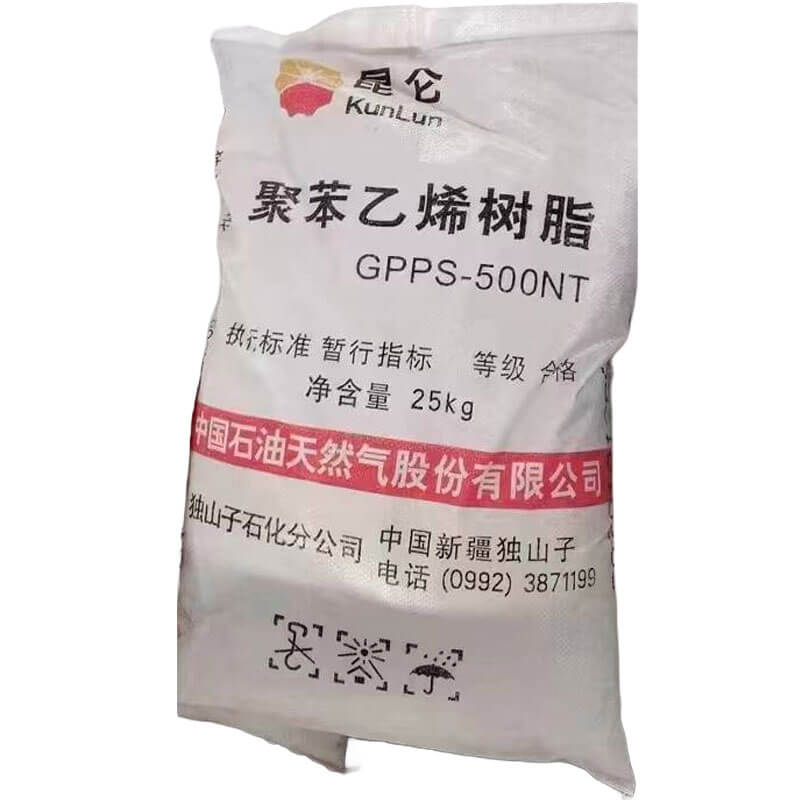
| Packing | Packaged in 25 kg heat-sealed polyethylene-lined bags, ensuring dry, contamination-free delivery of General-Purpose Polystyrene GPPS‑500. |
| Container Loading (20′ FCL) | 20′ FCL: General-Purpose Polystyrene GPPS-500 packed in bags, loaded, secured, and containerized for safe transport. |
| Shipping | GPPS‑500 is shipped as non‑hazardous solid polystyrene pellets in moisture‑resistant multi‑wall bags or sealed Gaylord boxes. Keep dry, avoid excessive heat, direct sunlight, and sharp impacts. Product may be transported by sea, rail, or truck; no special hazmat labeling is required under standard conditions. |
| Storage | Store GPPS‑500 in a cool, dry, well-ventilated area away from direct sunlight, heat sources, and open flames. Keep containers tightly sealed to prevent contamination and moisture uptake. Avoid dust accumulation and contact with strong oxidizing agents. Maintain stable temperatures; no special hazard if stored correctly. |
| Shelf Life | General-purpose polystyrene GPPS-500 has an indefinite shelf life when stored in a cool, dry place away from UV light and heat. |
In thin-wall dairy cup and bakery clamshell production, GPPS-500 is processed as a high-clarity monolayer sheet in which chill-roll topography must be transferred without post-crystallization haze. Extrusion-grade polystyrene with melt volume-flow rate between 4 cm³/10 min and 8 cm³/10 min under ISO 1133-1:2022 at 200 °C and 5 kg provides sufficient melt strength for downstream plug-assisted thermoforming while retaining low-enough viscosity for thin-wall fill. GPPS-500 datasheet values must be checked because the suffix 500 can identify a producer-specific flow class rather than a universal melt index.
Compliance for EU food contact requires the converted article to meet the overall migration limit of 10 mg/dm² under Regulation (EU) No 10/2011, with styrene monomer migration constrained by the Annex I specific migration limit of 50 mg/kg food simulant. For the United States, 21 CFR 177.1640 governs polystyrene polymers in food-contact articles. Converters must retain lot-specific declarations for residual styrene monomer, mineral hydrocarbon additives, and colorants because enforcement testing evaluates the entire finished article rather than the raw pellet.
Sheet extrusion is performed on a single-screw machine with a barrier screw, 33:1 to 38:1 L/D ratio, and screen-pack filtration at 150 µm or finer to remove gel contamination. Melt temperature is held at 200 °C to 230 °C. Die temperature set points are kept within 5 °C of the melt stream to reduce die-lip drool. The melt web is cast onto a polished vertical three-roll stack with roll temperatures between 60 °C and 80 °C. At roll temperatures below 60 °C, edge curl and stress marks appear in sheet thicknesses above 0.5 mm. Above 80 °C, blocking and surface tack increase transfer-roll contamination.
Plug-assisted thermoforming uses sheet surface temperature of 125 °C to 145 °C measured by contact pyrometer. The forming mold is held at 60 °C to 90 °C to prevent cold-draw defects. GPPS has a narrow thermoforming window because molecular orientation builds below 125 °C and sheet sag intensifies above 150 °C. Draw ratios for round dairy cups are normally limited to 1.5:1 to 2.0:1. Deeper geometries require softened plug geometry and controlled pre-stretch because amorphous polystyrene does not exhibit strain hardening comparable to PET. Regrind from post-industrial skeletons can be added at 20 wt% to 30 wt% if the scrap is dry, free of label adhesive, and re-extruded within the same food-contact line. Higher regrind addition increases gel count and accelerates die-lip deposit formation.
Terminal products include dairy cups, cold beverage tumblers, bakery clamshells, portion packs, and clear egg cartons. These parts are not suitable for hot-fill above 75 °C or for microwave reheating because Vicat softening and localized thermal collapse can occur. Alcohol-containing or high-fat fillings above 10% ethanol by volume should be avoided unless specific migration testing demonstrates compliance. Low notched impact strength, typically 1.5 kJ/m² to 2.5 kJ/m² under ISO 180/1A, makes thin-wall parts fracture-prone under vertical stacking loads; flange geometry and rim thickening of 0.3 mm to 0.5 mm are required.
For sterile petri dishes, culture tubes, cuvettes, and microtiter plates, the injection molding converter imposes stricter lot control than in packaging because leachable additives and residual stress gradients influence cell adhesion and optical readouts. Biocompatibility is assessed under ISO 10993-5:2009 for cytotoxicity and ISO 10993-10:2021 for irritation or sensitization when the final device has medical claims. Many diagnostic consumables are additionally certified to USP Class VI through USP <88> biological reactivity testing. Cleanroom molding under ISO 14644-1 Class 8 or better is common for open-cavity plates to reduce particulate burden.
When GPPS-500 is used for transparent diagnostic ware, melt temperature is held between 200 °C and 250 °C, with a target of 215 °C to 235 °C to balance clarity against thermal degradation. Mold steel temperature is maintained at 30 °C to 50 °C, and circulation water is controlled to ±2 °C to limit differential orientation. Hot-runner temperature should not exceed 240 °C. Residence time above 5 min at melt temperature produces a yellow tint from thermal oxidation. The screw is purged with cast acrylic or HDPE before extended shutdown because carbonized polystyrene decomposes to styrene and benzene and is difficult to remove.
Venting channels are polished to a land depth of 0.02 mm to 0.03 mm and width of 5 mm to 8 mm to prevent gas burn without allowing flash migration. Formulation is typically 100% virgin GPPS-500. External mould release agents are omitted because silicones and waxes migrate to well surfaces and suppress tissue-culture treatment. If colour is specified, masterbatch must be USP- or ISO-bio-certified and limited to 1 wt% to 2 wt%. Pigment particle size below 5 µm is required to avoid filter plugging in diagnostic instruments.
Tissue-culture surface treatment by corona or plasma follows molding. GPPS-500 as an unmodified aromatic polymer requires oxygen plasma at 50 W to 100 W for 30 s to 90 s to increase surface free energy to approximately 58 mN/m to 64 mN/m and introduce carboxyl or hydroxyl functionalization. Untreated polystyrene dishes do not support anchorage-dependent cell attachment. Terminal products include petri dishes, 96-well microplates, 24-well cell culture plates, single-use cuvettes, and serological pipette tubes.
Steam autoclaving at 121 °C exceeds the Vicat softening range and causes dimensional failure. Gamma irradiation at 25 kGy can be validated but increases yellowness index through free-radical formation. Ethylene oxide is generally selected when optical clarity after sterilization is a release criterion; dose mapping under ISO 11135:2014 is required. Published dose-yellowing data for GPPS-500 under specific gamma sources is limited; validation on finished ware is necessary.
When LED edge-lit panel fabricators specify a mid-cost optical polymer, GPPS-500 is employed where the continuous operating temperature stays below the Vicat softening point and where yellowing resistance is controlled through stabilizer loading. Typical formulation is 99.5 wt% to 99.8 wt% GPPS-500 with 0.2 wt% to 0.5 wt% ultraviolet absorber or hindered amine light stabilizer. The exact package is determined by final wall thickness and expected lateral UV exposure. Higher stabilizer addition above 0.5 wt% can increase surface haze and reduce total luminous transmittance below 88% for 2 mm plaques.
Sheet is extruded at melt temperature of 210 °C to 240 °C through a polished die with an adjustable lip, then calendared. Mold surface finish is matched to the diffuser pattern, and surface texture is replicated without additional polishing. Injection-molded diffusers use high-polish S136 steel inserts and melt temperature of 220 °C to 245 °C. Mold temperature is held at 40 °C to 60 °C to avoid visible knit lines at gate locations. Optical birefringence is inspected under crossed polarizers. Terminal products include LED panel diffusers, shower light covers, display trays, vending machine lenses, and point-of-sale display glazing.
Electrical enclosure parts require glow-wire testing according to IEC 60695-2-12:2021 only if the luminaire is designated as unattended and the polymer carries live parts. Standard GPPS typically meets UL 94 HB at 3.0 mm thickness, not V-2 or better. Flame retardant additives are not used in transparent diffuser grades because they raise haze. REACH SVHC and RoHS Directive 2011/65/EU compliance for cadmium, lead, and phthalates are required for electronic accessories. Outdoor installation causes polymer chain scission and yellowing within months unless the sheet is coextruded with a UV-capped acrylic layer.
| Sector | Melt temperature (°C) | Tool/roll temperature (°C) | Regrind limit (wt%) | Critical process control |
|---|---|---|---|---|
| Food packaging sheet/thermoforming | 200–230 | chill roll 60–80; forming mold 60–90 | 20–30 | sheet surface 125–145 |
| Laboratory diagnostic ware | 215–235 | 30–50 | 0 | hot runner ≤240; residence <5 min |
| LED diffusers and optical covers | 210–245 | 40–60 | 0–10 | UV stabilizer ≤0.5 |
| Cosmetic closures | 210–240 | 35–50 | 15–25 | melt cushion 3–6 mm |
| Office accessories | 200–230 | 25–45 | 20 | high injection speed for long flow paths |
| Toy model kit sprues | 190–210 | 25–35 | 0 | gate diameter 0.5–0.9 mm |
Cosmetic jars, caps, compact cases, and collar bands are injection-moulded from GPPS-500 when the brand requires high transparency, mould-surface gloss, and tight dimensional tolerance at a lower resin cost than styrene acrylonitrile or PMMA. The section is usually thin-walled. Wall stock between 1.2 mm and 2.5 mm and a large flat visible surface amplify weld-line and flow-mark defects.
Production formulation typically contains 98 wt% to 99 wt% virgin GPPS-500 and 1 wt% to 2 wt% cosmetic-grade styrenic color masterbatch. Pearlescent additives may be used only if their plate-like particles are below 15 µm to avoid gate streaks. Regrind reuse is capped at 15 wt% to 25 wt%. Regrind control matters because repeated heat history increases the melt-volume rate and darkens the melt. A shift of 2 cm³/10 min to 3 cm³/10 min can alter filling pressure and cause sink marks or uneven gloss.
Melt temperature is set at 210 °C to 240 °C with a hot-tip gate. Mould temperature is maintained at 35 °C to 50 °C using pressurized water. Melt cushion is held to 3 mm to 6 mm, and final pack pressure is set at 50% to 70% of peak injection pressure to minimize gate blush. Tool venting is cut to 0.015 mm to 0.025 mm on the parting line because GPPS has low off-gassing but high flash sensitivity at low viscosity.
Cosmetic packaging is not subject to food-contact migration limits but must comply with REACH Regulation (EC) No 1907/2006 and must not release prohibited substances into the cosmetic formulation under normal contact. Albumin and fragrance formulations can cause environmental stress cracking in polystyrene. Closures for perfume or alcohol-based products require compatibility testing because ethanol above 10% by volume can initiate craze growth. Silicone sealing wads may need a barrier liner because residual styrene monomer can transfer into volatile oil systems. Terminal products include cream jars, lip balm pots, powder-compact boxes, tube caps, and collar rings.
GPPS-500 is injection-moulded into pen barrels, drawing stencils, desk organizer trays, transparent file covers, and paper trimmer bodies. These products are not subject to food-contact or medical compliance. They fall under REACH, RoHS Directive 2011/65/EU for electronic office items, and relevant national packaging rules if they are blister-mounted. Virgin GPPS-500 is used at 100% with dry color masterbatch below 2 wt%. Regrind is permitted up to 20% if grinding is dust-controlled and no polycarbonate or acrylate contamination enters the recycle stream. Contamination by 0.1 wt% PP or PE produces delamination and visible fish-eye because these polyolefins are incompatible with the styrenic matrix.
Melt temperature is 200 °C to 230 °C, mold temperature 25 °C to 45 °C, and injection speed is high to fill long pen barrels before freeze-off. Barrel length-to-wall thickness ratios above 100:1 cause packing limitations and internal voids. The critical performance limit is notched impact strength, typically 1.5 kJ/m² to 2.5 kJ/m² under ISO 180/1A. Desk organizer corners and clip features require radii above 0.5 mm and wall thicknesses above 1.5 mm. Thin hinges snap on repeated flexing. If higher toughness is needed, conversion switches to HIPS or ABS because GPPS cannot be made ductile through processing changes alone.
Toy model kit sprues and snap-fit building parts are molded from GPPS-500 when the assembly requires stiff, brittle parts that the user can break away from the sprue without trimming tools. Conversion uses a low melt temperature window of 190 °C to 210 °C to reduce thermal degradation and retain enough molded-in stress to cause controlled fracture at the gate. This is an unusual operating condition because standard GPPS injection molding normally runs at 210 °C to 240 °C.
Toys sold in the EU must satisfy EN 71-1:2014+A1:2018 for mechanical and physical properties, EN 71-3:2019+A1:2021 for migration of elements, and REACH Annex XVII restrictions. The United States requires ASTM F963-17 and 16 CFR testing. Brittle GPPS parts are tested for sharp edges after drop impacts because shards can fail the sharp-edge clause.
Tool temperature is held at 25 °C to 35 °C to promote rapid skin formation and high residual stress in the gate region. The gate diameter is limited to 0.5 mm to 0.9 mm for sprue breakage. Low melt temperature raises viscosity. Injection pressure may rise to 90 MPa to 130 MPa, and cavity fill requires higher packing intensity. Venting depth is kept at 0.02 mm to prevent flash while allowing air escape. Formulation is 100% virgin GPPS-500. Regrind is not used in small parts because gate scrap and runners are brittle and may contain micro-fractures that reduce batch-to-batch consistency. Pigment masterbatch is limited to 1 wt% to 2 wt% and must be heavy-metal free.
Terminal products include model car sprues, airplane kit frames, building block components, and hobby part trays. These parts are unsuitable for children under 36 months due to small-part ingestion hazard, not due to polymer toxicity.
| Sector | EU / international standards | US standards | Critical limit or test |
|---|---|---|---|
| Food packaging | Regulation (EU) No 10/2011 | 21 CFR 177.1640 | overall migration 10 mg/dm²; styrene SML 50 mg/kg |
| Laboratory ware | ISO 10993-5:2009; ISO 14644-1 | USP <88> Class VI | cytotoxicity; particulate class |
| LED diffusers | RoHS 2011/65/EU; IEC 60695-2-12:2021 | UL 94 HB | HB at 3.0 mm; glow-wire if required |
| Cosmetic packaging | REACH (EC) No 1907/2006 | no specific federal food-contact standard | product compatibility; no prohibited release |
| Office accessories | REACH; RoHS 2011/65/EU | no uniform US standard | SVHC screening; heavy-metal limits |
| Toy model kits | EN 71-1:2014+A1:2018; EN 71-3:2019+A1:2021 | ASTM F963-17; 16 CFR | element migration; sharp-edge and small-part testing |
Competitive General‑Purpose Polystyrene GPPS‑500 prices that fit your budget—flexible terms and customized quotes for every order.
For samples, pricing, or more information, please contact us at +8618136850665 or mail to sales4@ascent-chem.com.
We will respond to you as soon as possible.
Tel: +8618136850665
Email: sales4@ascent-chem.com
Flexible payment, competitive price, premium service - Inquire now!
General‑Purpose Polystyrene GPPS‑500 is an amorphous, transparent thermoplastic produced by continuous mass polymerization of styrene monomer. The grade designation places the material in the medium‑flow segment of general‑purpose polystyrene, with representative melt flow rates of 5–10 g/10 min when measured at 200 °C under a 5 kg load per ISO 1133-1:2022. This melt‑flow band balances lower injection pressure against adequate melt strength for thin‑wall cavity filling. Because GPPS‑500 contains no polybutadiene impact modifier, it retains high light transmission; total transmittance on 2 mm plaques is typically 88–92 % per ASTM D1003-21, with haze below 2 %. Representative mechanical data reported in supplier literature for the GPPS‑500 flow band include tensile strength at yield of 45–52 MPa per ISO 527-2:2012, tensile modulus of 3,100–3,400 MPa, flexural modulus of 2,900–3,300 MPa per ISO 178:2019, Rockwell M hardness of 70–78 per ASTM D785-23, and Vicat softening temperature of 95–101 °C per ISO 306:2022 method B50. Density is 1.04–1.05 g/cm³ per ISO 1183-1:2019. Mould shrinkage is generally 0.4–0.7 % per ISO 294-4:2018, depending on wall thickness and gate geometry. These values are not lot‑specific; the producer’s certificate of analysis governs acceptance.
Molecularly, GPPS‑500 consists of atactic polystyrene chains with weight‑average molecular mass typically reported between 200,000 and 250,000 g/mol and polydispersity index 2.0–2.5 per ISO 16014-2:2019. The medium flow band corresponds to a melt viscosity at 200 °C and 100 s⁻¹ on the order of 300–500 Pa·s. Because polystyrene is strongly shear‑thinning, apparent viscosity at injection‑moulding shear rates above 1,000 s⁻¹ is substantially lower than at capillary rheometry shear rates. These values are representative for the flow band and should not replace lot‑specific capillary rheometry data.
In transparent rigid packaging and display parts, GPPS‑500 is specified where impact loading is low and optical clarity is the primary requirement. High‑impact polystyrene contains dispersed polybutadiene particles that increase notched Izod impact strength to 8–15 kJ/m² per ISO 180/A but reduce total transmittance and produce a milky appearance. GPPS‑500’s notched Izod impact strength is typically 1.5–2.5 kJ/m²; therefore, direct substitution is valid only for parts with wall thickness below 1.2 mm, no sharp corners, and expected drop heights below 300 mm. In point‑of‑sale display trays, GPPS‑500 provides dimensional stability and low warpage after ejection. The absence of butadiene also eliminates the potential for rubber‑phase crosslinking during multiple regrind histories. However, snap‑fit arms and living hinges must be avoided unless the design includes generous radii and low moulded‑in stress. Compared with styrene‑acrylonitrile copolymer, GPPS‑500 exhibits lower resistance to fats, oils, and aromatic hydrocarbons; repeated contact with vegetable oil can induce stress crazing. This limits replacement of styrene‑acrylonitrile copolymer in food‑contact applications with high fat content. In thin‑wall cups and clamshell trays produced by injection moulding, the medium‑flow rheology of GPPS‑500 allows filling of long thin sections with reduced injection pressure compared with lower‑flow GPPS grades, provided gate diameter is sufficient to prevent jetting.
Injection moulding of GPPS‑500 on hydraulic machines with clamp force from 80 to 250 tonnes uses a general‑purpose screw with L/D 20:1 and compression ratio 2.2:1 to 2.5:1. Melt temperature is maintained at 180–230 °C; residence time above 250 °C accelerates thermal depolymerization, producing yellowing and a reduction in molecular weight. Mould temperature is kept between 20 °C and 60 °C to balance surface gloss against sink marks. Injection pressure typically ranges from 60 to 100 MPa, with holding pressure at 40–70 % of peak injection pressure and back pressure below 1.0 MPa to minimize shear heating. Pre‑drying at 80 °C for 2–4 h is recommended when resin or regrind has been stored at relative humidity above 60 %; surface moisture above 0.1 wt% causes splay and bubble defects. Regrind addition up to 30 wt% is common in non‑critical packaging, but higher fractions increase viscosity variability and reduce impact strength; notched Izod impact can fall below the lower bound of 1.5 kJ/m² after repeated thermal histories. On cold‑runner tools with small gates, jetting and flow marks occur when the gate diameter is below 1.0 mm or injection velocity exceeds 40 mm/s; increasing the gate diameter and reducing velocity at the gate improves melt‑front uniformity. Venting depth below 0.03 mm should be maintained to prevent gas burn marks. For hot‑runner systems, manifold temperature is set within 5 °C of the melt temperature to avoid dead zones where depolymerization can form gel particles. Temperature uniformity across cavity surfaces within ±5 °C is necessary for consistent shrinkage and flatness; gradients greater than 10 °C produce differential shrinkage and warpage in thin lids. Purging with a higher‑flow GPPS or commercial purging compound is recommended after prolonged shutdown to remove degraded resin from the screw and barrel.
For sheet extrusion, GPPS‑500 can be processed on single‑screw extruders with L/D 30:1 to 36:1 and a barrier screw design. Melt temperature is maintained at 200–230 °C, while chill‑roll temperature is set at 60–90 °C to control surface finish and sheet flatness. Sheet thickness is typically 0.2–2.0 mm. Compared with lower‑flow GPPS‑300, GPPS‑500 has lower melt strength, so sheet above 2 mm may sag during thermoforming; plug‑assist speed and web tension must be reduced to maintain wall‑thickness distribution. The processing window narrows in thick‑sheet thermoforming because the balance between sag resistance and formability becomes sensitive to sheet surface temperature variations greater than 5 °C.
GPPS‑300 represents a lower‑melt‑flow grade with typical melt flow rate of 2.5–4.0 g/10 min under the same 200 °C/5 kg condition. The higher molecular weight of GPPS‑300 increases melt strength, which supports thick‑section extrusion and thermoforming but requires higher injection pressure and melt temperature. GPPS‑500’s lower viscosity permits faster cycle times and longer flow paths in thin‑wall tools, but the trade‑off is a slightly lower Vicat softening point and reduced environmental stress crack resistance. High‑impact polystyrene, by contrast, gains impact strength from polybutadiene‑modified polystyrene phases; this rubber modification lowers flexural modulus to 1,600–2,200 MPa and renders the material opaque. GPPS‑500 retains a flexural modulus above 2,900 MPa and transparency above 88 %, but its notched Izod impact strength is an order of magnitude lower than HIPS. Styrene‑acrylonitrile copolymer offers better resistance to aliphatic oils and margarine but has a higher processing temperature and a slightly yellow tint. The following tables summarize representative values for specification and comparative evaluation.
| Property | Test method | Representative range |
|---|---|---|
| Melt flow rate | ISO 1133-1:2022, 200 °C/5 kg | 5–10 g/10 min |
| Density | ISO 1183-1:2019 | 1.04–1.05 g/cm³ |
| Tensile strength at yield | ISO 527-2:2012 | 45–52 MPa |
| Tensile modulus | ISO 527-2:2012 | 3,100–3,400 MPa |
| Flexural modulus | ISO 178:2019 | 2,900–3,300 MPa |
| Notched Izod impact strength | ISO 180/A | 1.5–2.5 kJ/m² |
| Vicat softening temperature | ISO 306:2022 method B50 | 95–101 °C |
| Heat deflection temperature | ISO 75-2:2013, 1.8 MPa | 75–85 °C |
| Light transmittance | ASTM D1003-21, 2 mm | 88–92 % |
| Mould shrinkage | ISO 294-4:2018 | 0.4–0.7 % |
| Property | GPPS‑500 | GPPS‑300 | HIPS |
|---|---|---|---|
| Melt flow rate | 5–10 g/10 min | 2.5–4.0 g/10 min | 3–10 g/10 min |
| Notched Izod impact strength | 1.5–2.5 kJ/m² | 1.5–2.5 kJ/m² | 8–15 kJ/m² |
| Flexural modulus | 2,900–3,300 MPa | 3,000–3,400 MPa | 1,600–2,200 MPa |
| Light transmittance | 88–92 % | 88–92 % | Opaque |
| Vicat softening temperature | 95–101 °C | 97–103 °C | 88–100 °C |
For food-contact applications, GPPS‑500 can be evaluated under FDA 21 CFR 177.1640 for polystyrene and rubber‑modified polystyrene and under the European Framework Regulation EC 1935/2004 with migration testing per EN 1186-1:2002 and EN 13130-1:2004. Compliance declarations from the resin supplier should confirm monomer residues and total extractives are below the applicable limits in EU 10/2011. The grade is not intended for use with high‑fat food packaging unless the final part undergoes specific migration testing because of environmental stress crazing in contact with vegetable oils. Under REACH and RoHS Directive 2011/65/EU, typical GPPS compounds contain no added cadmium, lead, mercury, or hexavalent chromium; supplier declarations are required for lot‑level verification.
In thin‑wall disposable laboratory articles produced by injection moulding, GPPS‑500 provides transparency and dimensional accuracy, but maximum continuous service temperature is limited to 70–75 °C. Autoclaving at 121 °C causes distortion and is not permissible. Sterilization by gamma radiation is not recommended because polystyrene yellows and embrittles; ethylene oxide is preferred but requires extended aeration. For transparent covers and scales, the Rockwell M hardness of 70–78 per ASTM D785-23 resists routine handling abrasion better than high‑impact polystyrene, but the brittle failure mode defined by the notched Izod impact range of 1.5–2.5 kJ/m² per ISO 180/A remains the limiting boundary for components involving repeated impact or flexural loading.