| HS Code | 642791 |
| Density | 1.05 g/cm³ |
| Melt Flow Rate | 7 g/10min (200°C/5kg) |
| Tensile Strength | 45 MPa |
| Elongation At Break | 2.0% |
| Flexural Modulus | 3200 MPa |
| Flexural Strength | 75 MPa |
| Izod Impact Strength | 15 J/m |
| Heat Deflection Temperature | 80°C |
| Vicat Softening Point | 101°C |
| Light Transmittance | 90% |
| Refractive Index | 1.59 |
| Rockwell Hardness | R120 |
As an accredited General‑Purpose Polystyrene GPPS‑500NT factory, we enforce strict quality protocols—every batch undergoes rigorous testing to ensure consistent efficacy and safety standards.
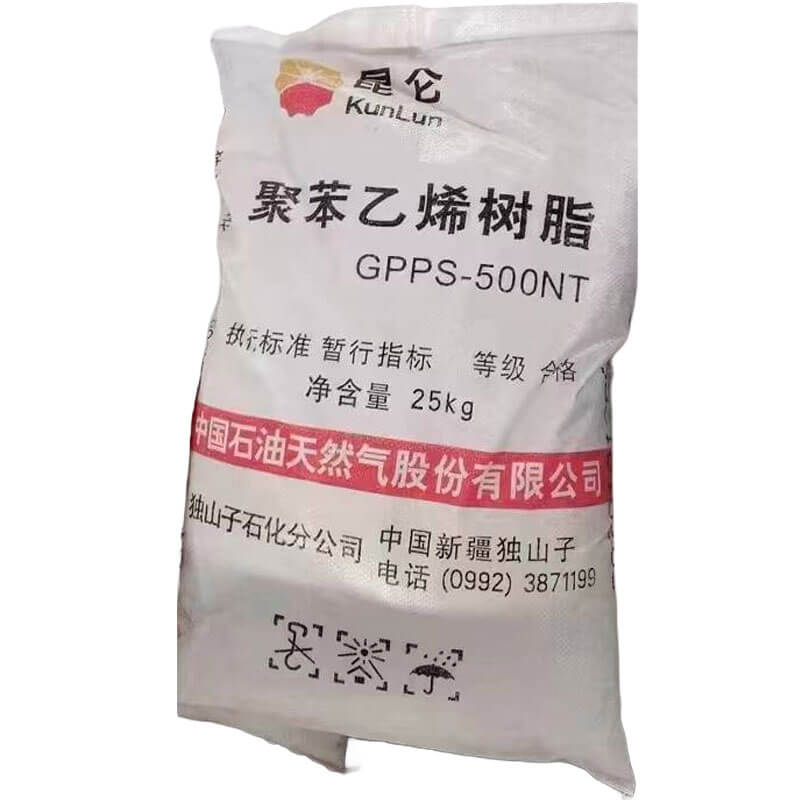
| Packing | General-Purpose Polystyrene GPPS-500NT is supplied in 25 kg sealed multi-ply paper bags, ensuring safe transport and storage. |
| Container Loading (20′ FCL) | 20' FCL: GPPS-500NT resin in 25kg bags, palletized and shrink-wrapped, securely stuffed into a 20-foot container. |
| Shipping | GPPS-500NT is shipped as solid polystyrene pellets in sealed, moisture-protective bags or drums. It moves via standard dry containers, trucks, or rail. Keep packages dry, away from heat, sparks, and direct sunlight. No hazardous cargo classification applies under normal transport conditions, but proper handling prevents pellet breakage and contamination. |
| Storage | Store GPPS‑500NT in a cool, dry, well‑ventilated area, protected from direct sunlight, heat, and ignition sources. Keep containers tightly sealed to prevent moisture pickup, dust contamination, and physical damage. No special bonding or grounding is required under normal conditions, but comply with all local safety and handling regulations for polymer resins. |
| Shelf Life | Shelf life is indefinite when stored in original packaging, away from direct sunlight, heat, moisture, and contaminants. |
Injection-molded 96-well microplates produced from GPPS-500NT operate under a narrow processing window because the combination of high melt viscosity and low strain-at-break leaves little margin for overpacking. Material is pre-dried at 70–80°C for 1–2 h when silo storage exceeds 60% relative humidity, although equilibrium moisture content for general-purpose polystyrene is normally below 0.1%. Lot-to-lot variation in melt volume-flow rate, typically falling between 6 cm³/10 min and 9 cm³/10 min when tested under ISO 1133-1:2022 condition H at 200°C and 5 kg, changes filling pressure by more than 15% across a validated 32-cavity or 64-cavity tool. The melt temperature at the nozzle is maintained at 230°C ± 5°C, while hot-runner manifold and tip temperatures are held at 215–225°C to avoid premature solidification at the valve-gate tip without thermally degrading low-molecular-weight tail fractions. Mold temperature is controlled between 35°C and 50°C because higher temperatures delay modulus build-up required for ejection, while lower temperatures raise frozen-in orientation in the 0.8–1.0 mm well walls. Injection velocity is set at 60–120 mm/s for the main filling stage, and switch-over to hold pressure occurs at 95–98% of the full shot volume. Hold pressure is limited to 60–80 MPa with a hold time of 6–10 s; excessive hold pressure around ejector-pad regions produces stress concentrations that later manifest as hairline cracks after ethylene oxide sterilisation. Post-mold shrinkage is measured according to ISO 294-4:2018 and typically falls between 0.4% and 0.7% after 24 h conditioning at 23°C ± 2°C and 50% ± 10% relative humidity. Dimensional checks on well-to-well spacing are referenced to the cavity drawings rather than to generic GPPS datasheet values because packing anisotropy shifts the outermost rows more than the centre rows by as much as 0.10 mm on a 127.76 mm plate length. Regrind from sprues and runners may be re-used up to 20 wt% if the source lot is controlled, but optical clarity degrades with repeated heat history. Biocompatibility evaluation for diagnostic disposables is customarily anchored to ISO 10993-5:2009 for cytotoxicity and, when the product is positioned as a USP Class VI non-implant article, to USP extraction tests for acute systemic toxicity. Ethylene oxide sterilisation is performed at 600–800 mg/L, 45–55°C, and 50–70% relative humidity for 2–4 h, followed by forced aeration for 12–24 h at 40–50°C. Gamma irradiation above 25 kGy is not recommended for GPPS-500NT because measurable yellowing and brittle failure at the gate land occur without post-irradiation recovery.
For monolayer thermoformable sheet used in bakery clamshells, deli trays, and portion cups, GPPS-500NT is extruded on a single-screw extruder with a screw diameter between 75 mm and 120 mm, an L/D ratio of 30:1 to 36:1, and a barrier screw with Maddock mixing elements. Melt temperature measured at the die lip is maintained at 210–235°C, while the feed zone is set to 60–80°C, the compression zone to 180–200°C, and the metering zone to 200–220°C to limit residual styrene monomer build-up. Screen packs are configured as 20/40/60 mesh to generate sufficient back pressure for homogenisation without raising melt temperature above 240°C. The polished three-roll stack is operated with a middle roll temperature of 70–85°C and lower/upper roll temperatures of 60–75°C; roll closure pressure is adjusted to produce sheet thickness between 0.35 mm and 1.20 mm with a thickness tolerance of ±0.05 mm. Sheet flatness is more sensitive to differential roll cooling than to melt temperature, and edge curl occurs when top and bottom roll temperatures differ by more than 5°C. The sheet is wound onto cores with an inner diameter of 76 mm or 152 mm after a post-slit edge trim of 5–15 mm per side. Thermoforming of this sheet is carried out at a sheet surface temperature of 135–150°C, measured with an infrared pyrometer; below 130°C the sheet tears at the clamp frame, and above 155°C the sheet draws unevenly and webbing increases. Plug assist is made from HDPE or nylon, maintained at 80–100°C, and pre-stretch air pressure is kept at 0.4–0.8 MPa. The maximum depth-to-diameter draw ratio for unmodified GPPS-500NT should not exceed 3:1, and corner radii below 3 mm cause cracking. Food-contact compliance is established under 21 CFR 177.1640 for polystyrene homopolymer and, for EU markets, under Regulation (EU) No 10/2011 with a styrene specific migration limit of 6 mg/kg and an overall migration limit of 10 mg/dm² as set out in Annex I and Annex II. Hot fill above 70°C, direct contact with high-proof ethanol, and oily food contact can induce stress cracking or swelling; published data for GPPS-500NT in high-fat service is limited, so such conditions remain outside the validated envelope unless formal migration testing demonstrates compliance.
For transparent jar bases, powder-compact lids, and outer caps in decorative cosmetic packaging, GPPS-500NT is injection-molded with a melt temperature of 220–240°C and a mold temperature of 40–60°C to achieve high clarity and surface gloss without the haze caused by rapid quenching. The mold cavities are polished to SPI A-1 diamond polish or equivalent VDI 3400 texture 12–15 for frosted sidewalls only when light diffusion is specified. Wall thickness is maintained between 2.0 mm and 3.5 mm for cap threads and jar flanges; sections thinner than 1.5 mm amplify notch sensitivity and lead to cracking during drop testing. A tab gate or banana gate with a diameter of 1.0–1.5 mm is positioned away from visible surfaces to prevent gate splay. The screw cushion is held at 3–6 mm, and backpressure is set to 0.8–1.5 MPa to homogenise colour masterbatch additions of 1–3 wt% without increasing melt residence time beyond 5 min. Post-mold annealing is performed at 60–70°C for 1–2 h only when the part is destined for vacuum metallisation; otherwise, unannealed parts retain dimensional stability after 48 h at 23°C ± 2°C. GPPS-500NT is unsuitable for direct contact with fragrance oils, ethanol, esters, and terpenes because these agents produce environmental stress cracking at the thread root and snap-fit undercuts within 24–72 h under constant strain. To maintain packaging integrity, an inner liner of PE or PP is press-fitted, or the GPPS outer shell is coated with a barrier varnish after UV curing. Heavy-metal restrictions for packaging are verified against EU Directive 94/62/EC with a combined lead, cadmium, mercury, and hexavalent chromium limit of 100 mg/kg, and the formulation is supplied with a REACH Annex XVII statement for restricted substances. The terminal products are clear jar bodies, metallised or tinted cap shells, and display bases where the GPPS layer remains non-load-bearing.
In indoor troffer luminaires, light diffusion sheet is extruded from GPPS-500NT at a die temperature of 220–235°C and polished roll temperatures of 80–95°C to produce a controlled matte surface without additional lacquer. Sheet thickness is typically 1.2–2.0 mm, and the width is slit to 595 mm or 620 mm for standard 600 mm and 625 mm module formats. Optical diffusion is achieved by adding 0.5–1.5 wt% of a light-diffusing masterbatch based on spherical polymethyl methacrylate or barium sulfate; the exact concentration is adjusted against a target luminous transmittance of 85–90% and a haze value above 90% measured under ISO 13468-1:2019 and ISO 14782:2021 respectively. Higher loadings above 2.0 wt% reduce total transmittance below 80% and increase melt viscosity and die-lip deposit formation. GPPS-500NT is not outdoor UV-stable, and published data for this specific configuration under long-term luminaire exposure is limited; indoor applications must still be checked for colour shift because blue-pumped white LED arrays can induce yellowing at the diffuser plane over time. The material must meet UL 94 HB minimum, and if the luminaire circuit contains accessible power above 0.2 A, glow-wire testing under IEC 60695-2-11:2021 at 650°C may apply. Local service temperature near LED boards should not exceed 65°C to avoid optical distortion and warpage; hot spots above 75°C near driver mounting bosses can produce sink marks and loss of flatness. The terminal product is a thin diffusion sheet placed between the LED array and the luminaire exit face, where the GPPS sheet functions as a low-cost rigid optical element with no impact-loading requirement.
In office automation equipment such as laser printer paper cassettes and multifunction control panels, transparent inspection windows and lens covers are injection-molded from GPPS-500NT where optical clarity at 2.0 mm section thickness and accurate surface profile are required but continuous service temperature remains below 65°C. The mold is designed with a tab gate or fan gate of 1.5–2.5 mm thickness, and the gate is located at the short edge so that molecular orientation fringes do not pass through the viewing aperture. Melt temperature is set at 220–235°C, mold temperature at 35–55°C, and filling speed is reduced to 30–60 mm/s for the first 20% of the flow path to prevent jetting from the gate. Holding pressure of 50–70 MPa is applied for 4–8 s, and screw back pressure is maintained at 0.5–1.0 MPa to disperse antistatic additives at 0.5–1.5 wt% without trapping volatiles. After ejection, parts are conditioned for 8 h at 23°C ± 2°C before optical inspection under a polariscope; local birefringence exceeding 500 nm retardation at the gate area is rejected. The material must meet flammability requirements under IEC 62368-1:2023 Clause 6 for fire safeguards, and a shoulder is provided for snap-fit mounting to avoid stress concentration at the screw boss. GPPS-500NT is not used adjacent to fuser rollers, separators, or lamp assemblies where surface temperatures exceed 75°C, because the heat deflection temperature under ISO 75-2:2013 method A at 1.8 MPa is only around 76°C for typical GPPS grades. The terminal components are cassette fill-level windows, front-panel display lenses, and scanner platen backing strips where impact loading is minimal.
Single-use serological pipettes of 1 mL, 2 mL, 5 mL, and 10 mL nominal capacity are injection-molded from GPPS-500NT with fixed or collapsible core pins whose flow-length-to-diameter ratio can exceed 20:1, making core deflection the dominant quality variable. The mold is run with melt temperature at 220–235°C, hot-runner drop tips at 210–225°C, and core pin temperature controlled by pressurised water channels at 35–50°C to prevent differential wall solidification along the graduated barrel. Injection speed is profiled from 20 mm/s at the tip to 80–100 mm/s along the main barrel, and switch-over to hold pressure is set at 95% of fill volume to avoid overpacking the thin side wall. Holding pressure is held at 50–70 MPa for 5–10 s, but pressure transmission along the core is uneven; wall-thickness variation of more than 0.05 mm between the tip and the mouthpiece is cause for rejection. Draft angle on the core is not less than 0.5°, and the ejector sleeve must advance without lateral runout because GPPS-500NT exhibits brittle failure at ejection if local strain exceeds its elongation at break of 1–2% under ISO 527-2:2012. Graduation ink adhesion is checked after corona discharge treatment at 38–44 dyn/cm surface energy, and the ink is selected from grades that cure below 60°C to avoid dimensional relaxation. Dimensional and volume tolerances are verified gravimetrically using water at 20°C, with accept/reject limits referenced to ISO 12772:1997 for serological pipettes. Ethylene oxide sterilisation is required; autoclave and gamma sterilisation are excluded because GPPS softens near 100°C and gamma irradiation causes yellowing and brittle failure at the mouthpiece. The terminal product is a single-use polystyrene aspirating pipette with printed graduations, packaged individually in a PE peel-pouch and intended for fluid transfer where transparency is more important than impact resistance.
Competitive General‑Purpose Polystyrene GPPS‑500NT prices that fit your budget—flexible terms and customized quotes for every order.
For samples, pricing, or more information, please contact us at +8618136850665 or mail to sales4@ascent-chem.com.
We will respond to you as soon as possible.
Tel: +8618136850665
Email: sales4@ascent-chem.com
Flexible payment, competitive price, premium service - Inquire now!
GPPS-500NT is a natural transparent general-purpose polystyrene supplied in pellet form for injection molding, sheet extrusion, and compounding. The class designation GPPS identifies an amorphous styrenic homopolymer without polybutadiene impact modification; the suffix NT is used commercially to indicate natural tint, while the numeric code 500NT is manufacturer-specific and does not itself encode melt-flow or viscosity. Under ISO 1622-1, the material belongs to the general-purpose polystyrene family. Components are produced in transparent packaging, disposable laboratory ware, display articles, office accessories, thin-wall packaging lids, and non-load-bearing diagnostic carriers, provided final article suitability is established under the applicable use condition. Because no discrete rubber phase is present, light transmission and surface hardness are higher than in high-impact polystyrene, but impact resistance and resistance to crack propagation are reduced. The amorphous character of the grade provides repeatable mold shrinkage and low optical haze, but it also imposes processing limits related to thermal degradation and molded-in stress.
The processing window is bounded primarily by moisture uptake, melt residence time, and mold temperature. Although polystyrene is less hygroscopic than polyamide, pellet surface condensation under changing ambient humidity can generate sufficient moisture to produce splay and silver streaks in transparent parts. Drying in a desiccant dryer at 80 °C for 2 h to 4 h is recommended when storage relative humidity exceeds 60% or when cold pellets are moved into a warm production area. The dew point of the drying air should be held below -20 °C, and dried material should be processed within 30 min when ambient relative humidity is above 70%. For injection molding, melt temperature measured at the nozzle should be maintained between 200 °C and 240 °C. Lower melt temperatures reduce thermal degradation but raise melt viscosity and increase molded-in orientation. Above 240 °C, viscosity reduction is accompanied by random chain scission, and at local stock temperatures above 280 °C, depolymerization products and yellowing appear rapidly. Melt residence time at 230 °C should not exceed 5 min; hot-runner drops and long nozzles must be designed to avoid dead spots where static polymer can accumulate and char.
The melt is pseudo-plastic and displays shear thinning. At low shear rates below 10 s⁻¹, unfilled GPPS-500NT exhibits a Newtonian plateau; at injection shear rates of 10² s⁻¹ to 10⁴ s⁻¹, viscosity decreases substantially. The melt volume-flow rate of 7.0 cm³/10 min at 200 °C and 5 kg places the grade in the medium-flow range, which balances packing pressure against molecular weight retention. Published data for the exact Cross-WLF viscosity coefficients of GPPS-500NT is limited; converter simulation should therefore be calibrated against spiral-flow and short-shot data on the target tool. A general-purpose screw with L/D 20:1 to 24:1 and compression ratio 2.5:1 to 3.0:1 is adequate for the medium-flow melt. Back pressure should be limited to 0.5 MPa to 1.5 MPa, and injection pressure set between 60 MPa and 100 MPa for typical thin-wall tools. Mold temperature is held from 30 °C to 60 °C; higher mold temperatures increase gloss and knit-line fusion but lengthen cycle time and may increase sink in ribs. Projected-area clamp-force requirements generally fall between 3.0 kN/cm² and 4.5 kN/cm² for unfilled thin-wall GPPS parts. Mold shrinkage is 0.3% to 0.6% when measured according to ISO 294-4:2018; flow-direction shrinkage is often lower, and local variation occurs at gates, ribs, and witness lines.
On production-scale injection machines, typical failure modes include gate blush, diametral sink in thick sections, and stress whitening at ejector pins. Higher mold temperature can reduce gate blush but may slow cycle time. Degraded material from previous shutdowns can generate black specks; purging with GPPS at 240 °C or with a commercial styrenic purging compound reduces contamination. Because repeated processing lowers molecular weight and shifts melt-flow upward, regrind use is possible but should be controlled at or below 20 wt% for clear packaging where optical haze is not permitted.
Representative property data for GPPS-500NT are listed in Table 1. These values are typical for the natural grade and are not lot-specific guaranteed limits; certificates of analysis should be checked for production-critical tolerances.
| Property | Typical value | Test method |
| Density | 1.04 g/cm³ | ISO 1183-1:2019 |
| Melt volume-flow rate | 7.0 cm³/10 min at 200 °C, 5 kg | ISO 1133-1:2022 |
| Tensile yield stress | 46 MPa | ISO 527-2:2012 |
| Tensile elongation at break | 2.0% | ISO 527-2:2012 |
| Flexural modulus | 3,100 MPa | ISO 178:2019 |
| Flexural strength | 75 MPa | ISO 178:2019 |
| Notched Charpy impact, 23 °C | 2.0 kJ/m² | ISO 179-1:2010 |
| Vicat softening temperature VST B50 | 96 °C | ISO 306:2022 |
| Heat deflection temperature HDT A 1.8 MPa | 85 °C | ISO 75-2:2013 |
| Light transmission, 3.2 mm | 89%–90% | ASTM D1003-21 |
| Mold shrinkage | 0.3%–0.6% | ISO 294-4:2018 |
| Water absorption, 24 h, 23 °C | <0.1% | ISO 62:2008 |
The 96 °C Vicat softening temperature places GPPS-500NT below SAN and ABS in continuous heat resistance. Load-bearing applications above 75 °C should be avoided unless the load is short-term, because HDT A at 1.8 MPa is 85 °C. The notched Charpy impact of 2.0 kJ/m² at 23 °C confirms that GPPS-500NT is brittle under high-speed point loading; snap-fit closures, hinges, and load-bearing clips are not appropriate unless geometry reduces stress concentration. The flexural modulus of 3,100 MPa supplies stiffness in transparent trays, drawers, and display panels. Because the material is amorphous, density is lower than SAN and ABS, and unfilled moldings show more isotropic shrinkage than many semicrystalline resins.
Substitution of GPPS-500NT for HIPS, SAN, or ABS depends on impact loading, chemical exposure, service temperature, and clarity. Table 2 presents comparative property ranges. HIPS contains dispersed polybutadiene rubber particles and therefore has much higher notched impact than GPPS-500NT, but it is opaque and has lower tensile modulus. SAN introduces acrylonitrile comonomer and raises heat deflection and solvent resistance; however, its melt-processing temperature is higher and its density increases to approximately 1.08 g/cm³. ABS provides impact resistance and toughness through a rubbery dispersed phase and an acrylonitrile-styrene matrix, but it is opaque and carries higher density and melt viscosity. In transparent parts requiring moderate heat resistance and chemical resistance, SAN is a more functionally competing material than HIPS or ABS. GPPS-500NT retains high light transmission and lower density, but it does not provide equivalent resistance to oils, alcohols, and alkaline detergents.
| Material | Notched Charpy impact at 23 °C (ISO 179-1/1eA) | HDT A 1.8 MPa (ISO 75-2) | Light transmission (ASTM D1003) | Optical character |
| GPPS-500NT | 2.0 kJ/m² | 85 °C | 89%–90% | transparent |
| HIPS | 8–15 kJ/m² | 75–85 °C | not applicable | opaque |
| SAN | 2.5–3.5 kJ/m² | 95–100 °C | 88%–90% | transparent |
| ABS | 15–35 kJ/m² | 95–105 °C | not applicable | opaque |
The comparative impact values are measured according to ISO 179-1/1eA; the HIPS range reflects typical commercial butadiene-modified grades and varies with rubber content. In thin-wall transparent packaging, GPPS-500NT is closer to SAN in fill behavior than to ABS because the melt volume-flow rate at 200 °C and 5 kg is 7.0 cm³/10 min, whereas many SAN grades are 10–25 cm³/10 min and many ABS grades are 5–15 cm³/10 min depending on rubber level and matrix molecular weight. Substitution of GPPS-500NT for HIPS in a snap-fit enclosure typically produces immediate impact failures. Published data for precise drop-weight performance of GPPS-500NT under all assembly configurations is limited, so component validation must include worst-case drop testing at the lowest end-use temperature.
Optical quality also differentiates GPPS-500NT from opaque styrenics. HIPS and ABS are opaque because the rubber phase has a refractive-index mismatch with the styrenic matrix. GPPS-500NT provides light transmission of 89%–90% at 3.2 mm, but this value falls when the melt is overheated or when HIPS contamination exceeds roughly 1 wt%. Colored resin contamination, degraded polymer residues, and excessive regrind reduce transmission and increase haze. Aromatic hydrocarbons, chlorinated solvents, ketones, esters, and many paint thinners attack the surface, causing stress cracking and optical degradation. Long-term outdoor exposure is not recommended, and ultraviolet stabilization must be added if exterior use is contemplated.
Regulatory documentation for GPPS-500NT must be matched to the specific sales specification. Typical compliance statements may cover REACH Regulation (EC) No 1907/2006 and RoHS Directive 2011/65/EU as amended. Food-contact suitability is not automatic for every produced lot. Polystyrene homopolymer may fall under FDA 21 CFR 177.1640 and EU Commission Regulation (EU) No 10/2011, but the converter remains responsible for migration testing of the final article under the intended time–temperature profile. The material should not be used in direct contact with high-fat foods or aggressive solvents without supporting extraction data. For medical and diagnostic applications, biocompatibility is not established by the resin grade alone; sterilization compatibility also requires validation. Steam autoclaving above 85 °C is not suitable because the heat deflection temperature is close to 85 °C at 1.8 MPa. Gamma irradiation may produce yellowing and molecular-weight loss at sterilization doses. Ethylene oxide may be used only after confirming that residual gas and by-products are below applicable limits for the finished device.
Sheet extrusion of GPPS-500NT is performed with a single-screw extruder having L/D 30:1 and a barrier flight screw to supply a homogeneous melt to the flat die. Melt temperature at the die adaptor is maintained between 210 °C and 240 °C; die lips are held at 220 °C to 230 °C to prevent surface transverse lines. A polished three-roll stack with roll temperatures from 60 °C to 90 °C is used to produce high-gloss transparent sheet. Sheet thickness from 0.2 mm to 5.0 mm can be produced; thin sheet requires higher roll speeds and static-controlled handling to prevent dust pickup. The formed sheet is wound with interleaving film for thermoforming operations. Thermoforming of GPPS-500NT sheet requires uniform sheet surface temperature of 130 °C to 150 °C, with lower temperatures producing brittle cracking and higher temperatures causing sag and webbing. For cut-sheet thermoforming, radiant heaters are cycled to prevent surface skin overheating. Mold temperature is held below 60 °C, and plug-assist materials such as syntactic foam reduce chill marks. Regrind from skeletal web and edge trim may be reintroduced at up to 20 wt% if optical haze and color shift are controlled; higher levels reduce light transmission and lower viscosity, changing sheet sag and wall thickness distribution. Cleanliness of the regrind stream is more critical for GPPS-500NT than for opaque styrenics because black specks and incompatible polymer contamination are visible in transparent packaging. Processing outside these conditions may create die lines, gel particles, stagnant melt degradation, or sheet thickness variation.