| HS Code | 524026 |
| Density | 0.960 g/cm³ |
| Melt Flow Rate 190 C 2 16 Kg | 8.0 g/10min |
| Tensile Yield Strength | 26.0 MPa |
| Tensile Modulus | 1100 MPa |
| Elongation At Break | 500% |
| Flexural Modulus | 1200 MPa |
| Notched Izod Impact Strength 23 C | 6.0 kJ/m² |
| Vicat Softening Temperature 10 N | 125 °C |
| Heat Deflection Temperature 0 45 Mpa | 75 °C |
| Shore D Hardness | 63 |
| Environmental Stress Crack Resistance F50 | >20 h |
| Melting Point Dsc | 130 °C |
As an accredited High‑Density Polyethylene (HDPE) DMDA-8008H factory, we enforce strict quality protocols—every batch undergoes rigorous testing to ensure consistent efficacy and safety standards.
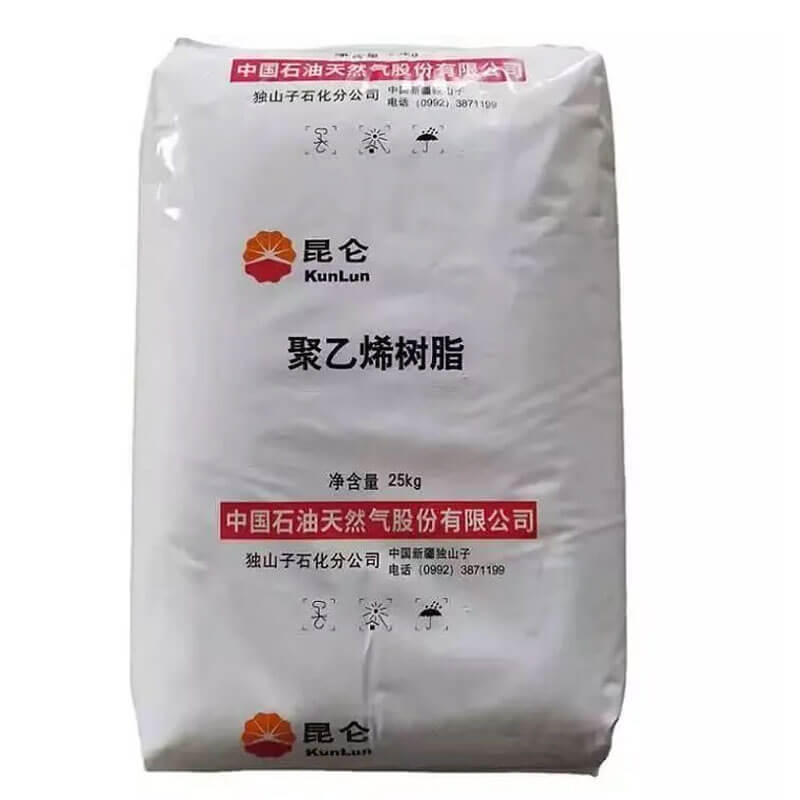
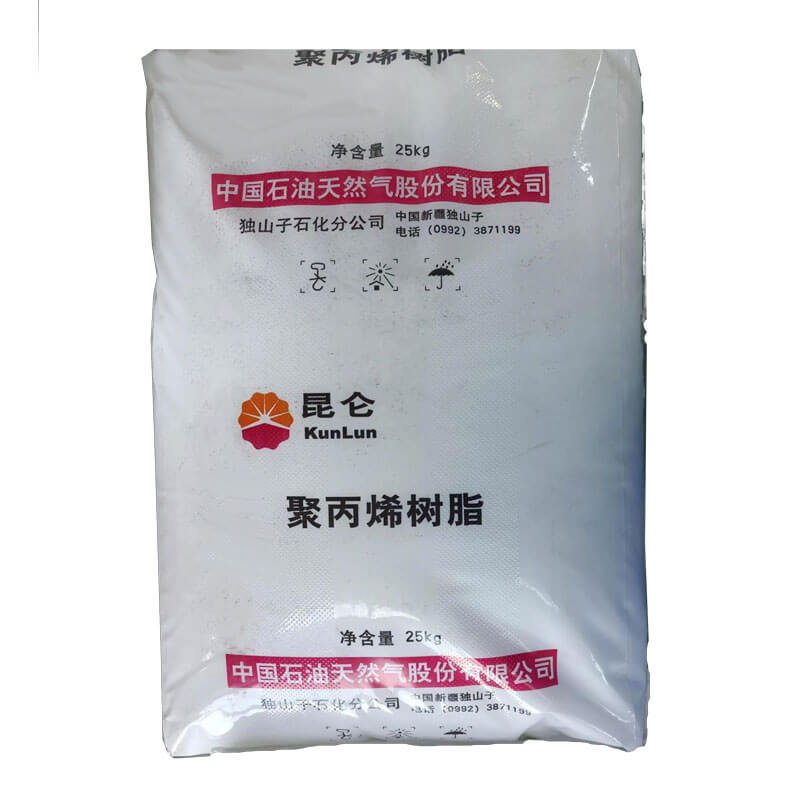
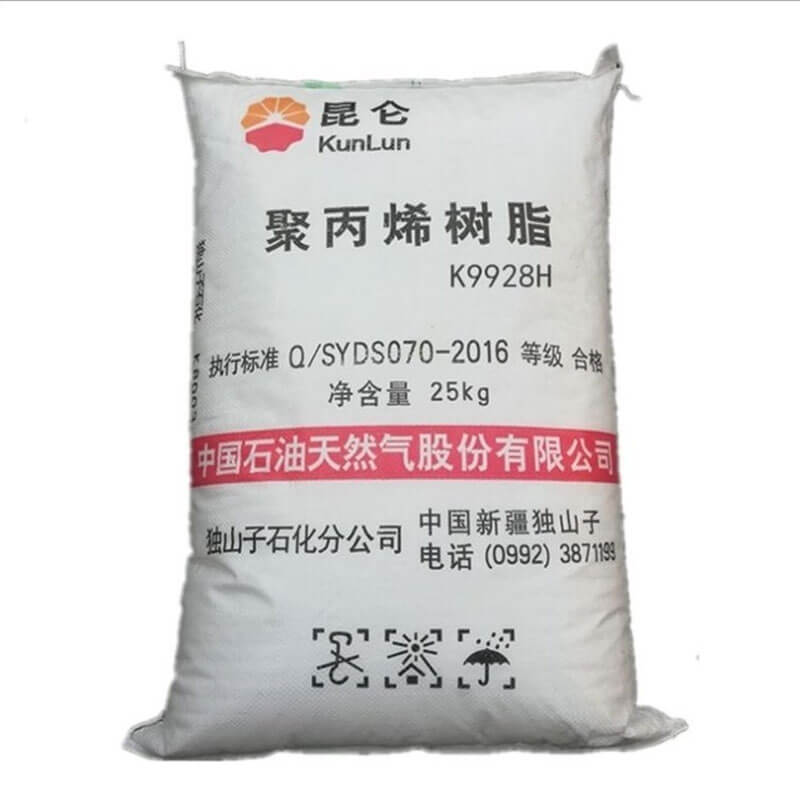
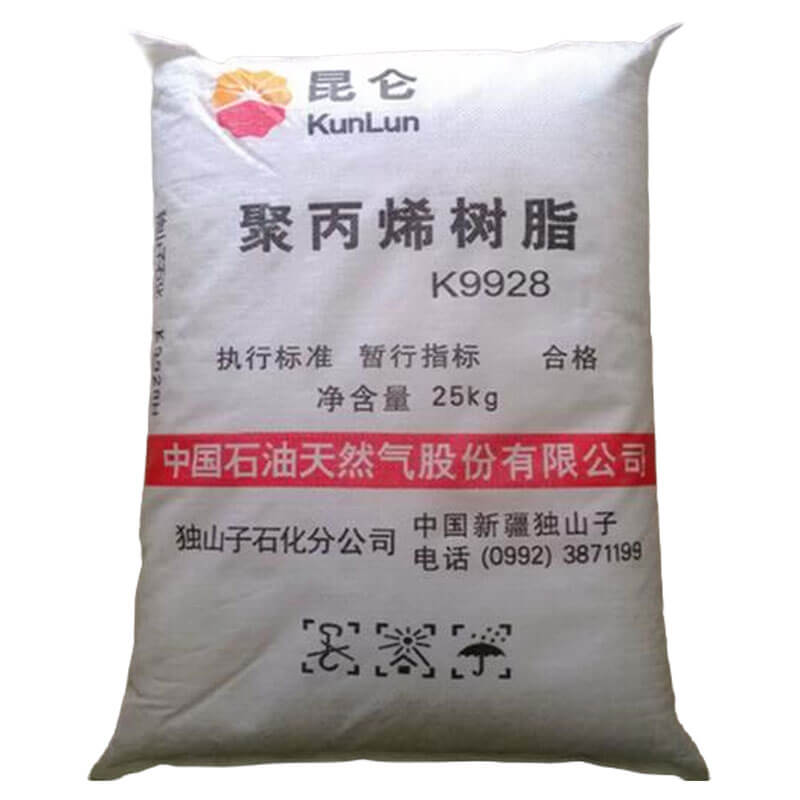
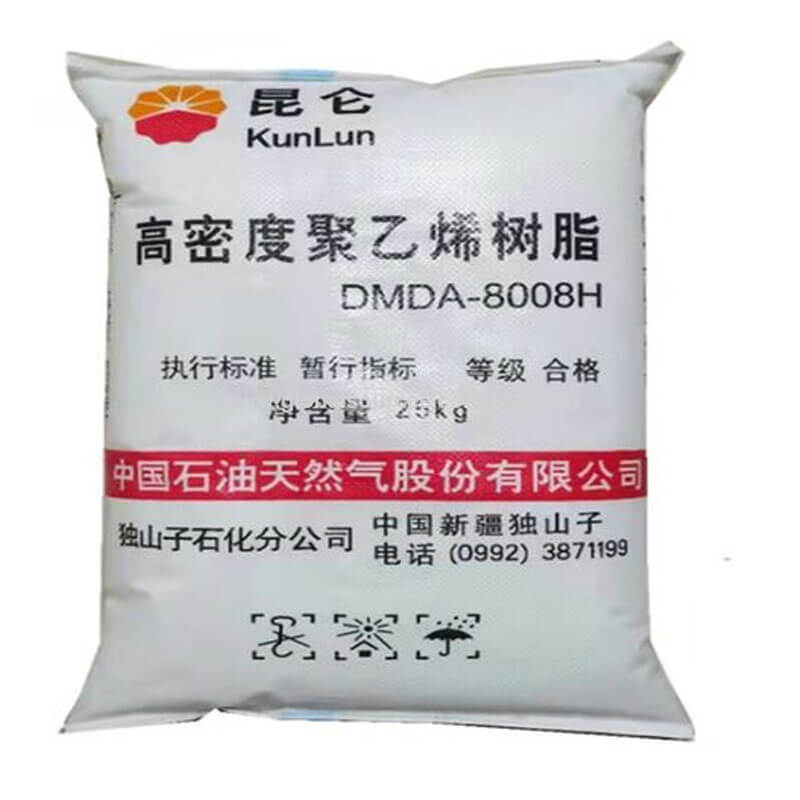
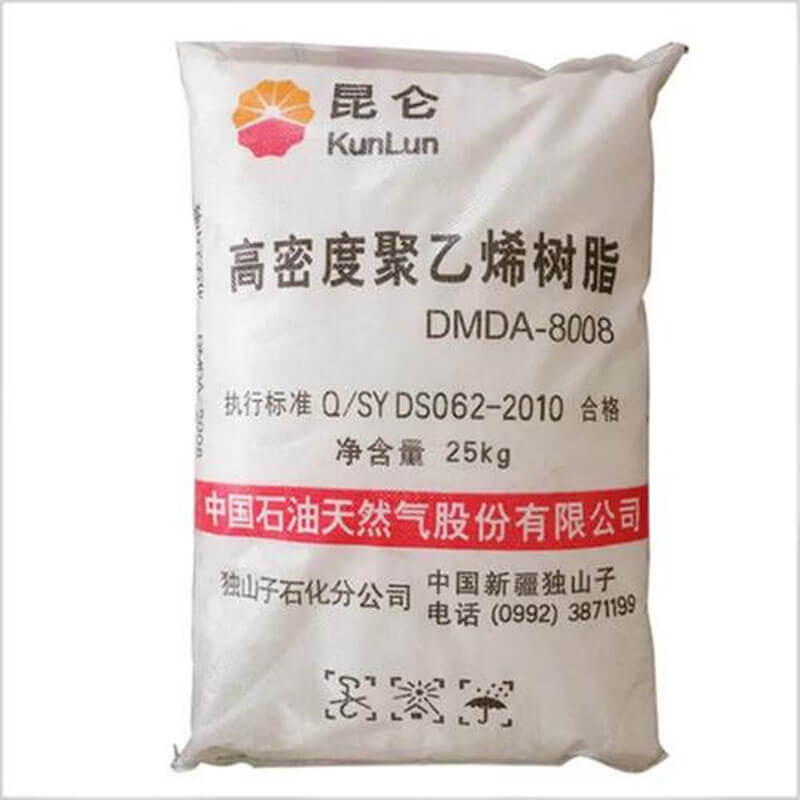
| Packing | Packaged as 25 kg moisture-resistant polyethylene bags, sealed and palletized, ensuring safe handling and storage of HDPE DMDA-8008H resin. |
| Container Loading (20′ FCL) | 20′ FCL loaded with High-Density Polyethylene DMDA-8008H resin, packed in 25kg bags on pallets, secured and weight-optimized for safe transport. |
| Shipping | High-Density Polyethylene DMDA-8008H ships as non-hazardous resin in moisture-protective bags, bulk containers, or railcars. Keep dry, clean, and away from heat sources. Use covered trailers or containers to prevent contamination. Secure loads properly and store in well-ventilated areas, avoiding direct sunlight and excessive temperature. |
| Storage | Store HDPE DMDA-8008H in a cool, dry, well-ventilated area, away from direct sunlight, heat, and ignition sources. Keep containers tightly sealed to prevent moisture absorption and contamination. Avoid storage near oxidizing agents. Under these conditions, the material remains stable with a typical shelf life of several years. |
| Shelf Life | Shelf life is indefinite if stored in a cool, dry area, away from sunlight, moisture, and contaminants. |
For UN-certified 25 L jerrycans in aggressive hydrocarbon and agrochemical service, DMDA-8008H is converted on accumulator-head shuttle blow moulding machines with a screw diameter of 75–90 mm, an L/D ratio of 24:1, and clamp force of 60–80 t. The resin’s 0.8 g/10 min melt index class at 190 °C under 2.16 kg load provides a parison hang time sufficient for wall distribution from the neck insert to the base pinch-off seam. The formulation is maintained at 80 wt% virgin DMDA-8008H, 18–20 wt% edge-trim regrind, and 2 wt% colour masterbatch, with regrind introduced only after metal detection and filtration through 325 µm screen packs. Blow air pressure is set at 0.6 MPa, mould cooling water at 12 °C, and melt temperature at 190–210 °C; die gap programming varies from 1.2 mm at the neck to 2.0 mm at the base to compensate for parison sag. The finished 25 L jerrycan has nominal sidewall thickness of 1.4 mm, a handle pinch-off weld, and approximate mass of 1.1 kg. Compliance is demonstrated through ASTM D1693-21 condition A for environmental stress crack resistance, ISO 1183-1:2019 for density, ISO 1133-1:2022 for melt flow index, and UN Model Regulations 6.1.5 and 6.1.6 for drop and hydraulic pressure performance. Production-scale failure appears as wall thinning at the handle bridge when melt temperature exceeds 220 °C, and base flash pinching when the accumulator shot capacity is operated above 85% of nominal volume.
In multilayer automotive fuel tank coextrusion, DMDA-8008H serves as the structural HDPE layer in a six-layer structure comprising outer virgin HDPE skin, regrind layer, maleic anhydride grafted tie layer, EVOH barrier layer, tie layer, and inner HDPE skin. The nominal layer distribution for a 60–85 L tank is 30 wt% outer HDPE, 40 wt% regrind, 2 wt% tie, 3 wt% EVOH, 2 wt% tie, and 23 wt% inner HDPE. The EVOH barrier layer is maintained at 20–35 µm thickness because below 18 µm pinhole frequency rises sharply, while above 35 µm differential parison stretch produces layer thickness oscillation. Parison sag is the limiting defect: the 0.8 g/10 min grade provides high melt strength, but accumulator drop time must be kept below 8–10 s for a 12 kg parison to avoid sag-induced thinning at the dome. Die swell is held to 1.4–1.7 radial expansion through a diverging die gap of 2.4–3.6 mm, and blow pressure is set at 0.7 MPa with mould temperature at 8–12 °C. Coextrusion die pressures typically range from 25 MPa to 35 MPa in the HDPE channel. Compliance is tested under UN ECE R34 Annex 5 fire resistance, SAE J2260 permeation, and FMVSS 301 impact integrity. For diesel service, monolayer HDPE tanks using DMDA-8008H may be acceptable; for gasoline, the EVOH barrier is mandatory because HDPE exhibits hydrocarbon mass gain of 1–3% after long-term immersion. Operational boundary: aromatic oxygenates such as methanol above 5 vol% can swell the tie layer and should be avoided unless the specific barrier system is validated.
When converting DMDA-8008H into 220 L open-head drums for solid or viscous chemical packaging, the dominant process constraints are parison wall uniformity and top chime dimensional stability. Accumulator-head machines with shot capacity of 3.0–4.5 kg, screw diameter 100–120 mm, and L/D 24:1 are used. The parison is extruded through a die gap of 2.8–4.0 mm and inflated at 0.5–0.7 MPa; mould cooling is held at 10–14 °C with an internal blow pin supplying chilled air to reduce cycle time from 120 s to 90 s. A post-cooling fixture maintains top rim roundness; without it, shrinkage after demoulding produces out-of-roundness above 8 mm and lid leakage. The formulation is 78 wt% virgin DMDA-8008H, 20 wt% regrind, and 2 wt% UV-stabilised masterbatch; for electrostatically safe drums labelled as Type II, an antistatic masterbatch is added at 2–4 wt% to achieve surface resistivity below 10^9 Ω per IEC 61340-2-3. Sidewall thickness is maintained at 1.8–2.5 mm, while the chime section is thickened to 3.0–4.0 mm by programming the die gap. Compliance includes UN 1H2 open-head design type approval under UN 6.1.5 drop and UN 6.1.6 stacking tests, ISO 178:2019 flexural modulus, and ASTM D1693-21 condition A. A common batch-to-batch failure occurs when regrind contains more than 0.5 wt% fines smaller than 200 µm; these fines create microporosity at the internal fusion line and reduce drop integrity at -18 °C.
| Downstream configuration | Melt temperature (°C) | Die gap (mm) | Blow pressure (MPa) | Mould temperature (°C) | Regrind fraction (wt%) |
|---|---|---|---|---|---|
| 25 L UN jerrycan | 190–210 | 1.2–2.0 | 0.6 | 12 | 18–20 |
| 220 L open-head drum | 195–215 | 2.8–4.0 | 0.5–0.7 | 10–14 | 20 |
| 1000 L IBC inner bottle | 190–210 | 4.0–6.0 | 0.6 | 10–15 | 25 |
| 60–85 L automotive fuel tank | 190–215 | 2.4–3.6 | 0.7 | 8–12 | 40 |
At the 1250 L IBC inner-bottle scale, wall thickness distribution rather than absolute melt strength determines the maximum allowable regrind fraction and drop-test survival. DMDA-8008H is processed on single-station or shuttle accumulator machines with shot capacity of 18–25 kg, extruder screw diameter 120–150 mm, and clamp force of 300–400 t. The parison is programmed through 80–120 points to create a sidewall of 2.0–2.8 mm and a bottom radius of 3.5–4.5 mm; blow pressure is 0.6 MPa and mould temperature is 10–15 °C. The inner bottle is inserted into a steel frame and qualified under UN 31H1 through bottom lift, top lift, stacking, and drop tests according to UN Model Regulations Chapter 6.5. The formulation is 72 wt% virgin DMDA-8008H, 25 wt% regrind, and 3 wt% UV/colour masterbatch. Regrind above 30 wt% reduces environmental stress crack resistance, and when the bottle is used for sodium hypochlorite solution at 10–12% active chlorine, stress cracking accelerates at the attachment ring; under such service the regrind fraction is reduced to 10–15 wt%. The neck thread area is calibrated to 3.2 mm minimum thickness because the cap tether and gasket seating surface create a stress concentration. Thickness below 2.8 mm at the neck flange leads to intermittent leakage after the 2 m drop test. For aggressive solvents, surface fluorination is applied to reduce permeation and paneling; published data for this specific configuration is limited, so fluorination level and barrier performance must be validated on a fill-specific basis.
Free-standing outdoor storage tanks of 500–1500 L capacity impose different stabilisation requirements on DMDA-8008H because ultraviolet radiation and stagnant fertiliser contact dominate long-term performance. A formulation of 97 wt% DMDA-8008H, 2 wt% carbon black masterbatch, and 1 wt% HALS masterbatch is used for black or dark grey tanks; natural-white tanks require a benzotriazole or HALS package at 0.3–0.5 wt% active content because titanium dioxide alone accelerates surface oxidation. Wall thickness is specified at 4.0–5.5 mm for structural rigidity and to provide UV screening depth. Melt temperature is capped at 210 °C because HALS compounds can degrade above 220 °C and reduce weather resistance. Accelerated weathering is tested under ISO 4892-2:2013 for 2000 h; after exposure, tensile elongation at break must remain above 50% when tested per ISO 527-2:2012. Impact strength at -20 °C is measured with ISO 179-1:2023 Charpy notched specimens. Incompatibility: zinc stearate above 0.2 wt% can antagonise HALS performance and should be controlled if external lubrication is added. Published outdoor exposure data for DMDA-8008H black tanks beyond 5 years remain limited; the 10-year service statement is confirmed through accelerated weathering extrapolation rather than direct field data. Production-scale failure appears as surface crazing within 18 months when natural HDPE is used without an adequate UV package, whereas the same part at 2 wt% carbon black loading shows no measurable loss under identical test conditions.
| Application | Normative basis | Test method | Critical criterion |
|---|---|---|---|
| 25 L UN jerrycan | UN 3H1 | UN 6.1.5, UN 6.1.6, ASTM D1693-21 | No rupture; ESCR F50 > 50 h |
| 60–85 L automotive fuel tank | UN ECE R34, SAE J2260 | Fire resistance, permeation | No leakage after impact; barrier retention |
| 220 L open-head drum | UN 1H2 | UN 6.1.5, ISO 178:2019 | No rupture at -18 °C |
| 1250 L IBC inner bottle | UN 31H1 | UN Chapter 6.5 | No leakage after bottom lift and drop |
| 500–1500 L agricultural tank | ISO 4892-2:2013 | ISO 527-2:2012, ISO 179-1:2023 | Elongation retention > 50% |
| 3–5 L automotive reservoir | FMVSS 302 | ISO 179-1, ISO 527-2 | Self-extinguishing; impact at -30 °C |
When flash levels exceed 35 wt% in small-bore suction blow moulding of 3–5 L windscreen washer reservoirs and headlamp washer bottles, regrind return is controlled through closed-loop metering at 25 wt% because higher levels reduce pinch-off weld strength at bracket bosses. DMDA-8008H is processed at melt temperature 185–205 °C with blow air pressure of 0.4–0.6 MPa; the mould is run at 20–25 °C to reduce condensation in humid plants. Wall thickness is 1.0–1.6 mm, and insert shutoff areas are reinforced by parison programming. Regrind is filtered through 325 µm screen packs to remove label contamination. The final part is tested for low-temperature impact at -30 °C using ISO 179-1, for compatibility by immersion at 60 °C for 500 h in 50% ethylene glycol/water or methanol solution per ISO 1817:2022, and for flammability per FMVSS 302. A process conflict arises when output is increased by raising melt temperature; at 215 °C, weld-line strength at the filling neck drops below 80% of nominal tensile yield under ISO 527-2.
Competitive High‑Density Polyethylene (HDPE) DMDA-8008H prices that fit your budget—flexible terms and customized quotes for every order.
For samples, pricing, or more information, please contact us at +8618136850665 or mail to sales4@ascent-chem.com.
We will respond to you as soon as possible.
Tel: +8618136850665
Email: sales4@ascent-chem.com
Flexible payment, competitive price, premium service - Inquire now!
High-Density Polyethylene (HDPE) DMDA-8008H is a high-molecular-weight ethylene-hexene-1 copolymer supplied as pelletized resin for extrusion blow molding. Published technical data sheets list a nominal melt flow rate of 0.80 g/10 min when determined at 190°C and 2.16 kg in accordance with ISO 1133-1:2022 and a nominal density of 0.956 g/cm³ measured by ISO 1183-1:2019. The grade is used principally in containers from 250 mL to 25 L for household chemicals, agricultural chemicals, and short-term pharmaceutical packaging where national pharmacopoeia testing is completed by the converter. It is differentiated from general-purpose HDPE bottle resins by an environmental stress-crack resistance exceeding 1,000 h under ASTM D1693 Condition B in 100% Igepal CO-630. The combination of density, melt index, and ESCR places the product in the stiff, high-toughness blow-molding segment rather than in film, pipe, or injection-molding portfolios.
Underlying this balance is a molecular architecture in which density is reduced only enough to allow tie-molecule formation. The grade contains a high-molecular-weight fraction that increases melt elasticity and parison sag resistance. Because the comonomer is hexene-1, the short-chain branch length after copolymerization is 4 carbon atoms, compared with 2 carbon atoms for butene-1. At a fixed density of 0.956 g/cm³, the longer branch allows a greater tie-molecule concentration without requiring the same degree of crystallinity loss as a butene-based copolymer. Slow crack growth in high-density polyethylene is controlled by tie-molecule density, and the result is an ESCR value under ASTM D1693 Condition B that exceeds 1,000 h while flexural modulus remains near 1,380 MPa.
In a notched specimen exposed to 100% Igepal CO-630 at 50°C, the brittle-ductile transition is shifted to longer times because the resin contains a higher concentration of tie molecules that bridge adjacent lamellae. Hexene-1 generates a C4 branch after insertion, extending further into the amorphous phase than the C2 branch from butene-1. Under sustained stress, the C4 branch disrupts crystallinity less than a shorter branch would at an equivalent comonomer molar content. The same trend is visible in low-temperature impact resistance: brittleness temperature by ASTM D746 is reported below −75°C, which is lower than many butene-based HDPE grades of similar density. However, published data for exact comparator grades under identical processing is limited.
In comparison with a commodity butene-based HDPE blow-molding resin of density 0.954 g/cm³ and melt index 0.35 g/10 min, DMDA-8008H does not rely on the lowest melt index to obtain environmental stress-crack resistance. The lower-melt-index comparator produces higher head pressure at equivalent screw speed and may require a higher melt temperature to avoid melt fracture. In contrast, DMDA-8008H at 0.80 g/10 min retains a high-molecular-weight tail sufficient for parison integrity. Compared with an injection-molding HDPE of melt index 20–50 g/10 min, the blow-molding grade has much lower flow and is not suitable for thin-wall injection molding; standard reciprocating-screw presses would require melt temperatures above the recommended range to fill wall sections under 1 mm, and this leads to oxidative degradation.
For pressure-pipe PE100 grades, the density may be similar, but the molecular weight distribution and comonomer placement are optimized for hydrostatic strength under ISO 9080. DMDA-8008H is not classified as PE100 and has no published hydrostatic strength curve for pressure service. It should not be used for water or gas distribution. For film-grade HDPE of similar melt index, the density is often below 0.950 g/cm³; the higher density of DMDA-8008H gives higher stiffness but lower dart impact in thin films, so the product is not intended for blown film below 50 µm.
On an accumulator-head blow molder with an 80 mm single-screw extruder and 24:1 L/D barrier screw, melt temperatures of 190–220°C are typical for this melt-index class. Die-head temperatures below 180°C increase shear stress at the die lip and produce shark-skin on the parison; die temperatures above 230°C accelerate thermo-oxidative chain scission in unpigmented resin. Parison die gap is commonly set between 1.8 mm and 2.3 mm, and blow air pressure of 0.55–0.75 MPa is used to expand the parison against the mold. Mold temperature is maintained between 10°C and 40°C to control surface gloss and cooling cycle. The parison programmer must be adjusted because high-molecular-weight HDPE shows time-dependent sag; die swell in this melt-index class is typically 45–60%, but published data for this specific configuration is limited. A container with a wall thickness below 0.4 mm may require a higher melt temperature or lower molecular weight resin, while a wall thickness above 4 mm may require a lower mold temperature to avoid voids.
At screw speeds above 70 rpm on an 80 mm grooved-feed extruder, shear heating can raise melt temperature by 15–25°C. The barrel temperature profile should therefore be adjusted to keep the melt below 220°C at the die. If melt pressure before the screen changer exceeds 40 MPa, screen blockage, insufficient barrel feed, or too low a die temperature is indicated. Production-scale variation in screen-pack loading and pellet fines above 100 ppm can alter head pressure and parison length; monitoring of melt pressure and parison pinch-off width is used to detect batch-to-batch variation that is not captured by melt index alone.
Color concentrates and UV stabilizer masterbatches must be pre-blended with pellets before hopper feed; direct dosing at the feed throat without a static mixer can cause wall-thickness variation. On a grooved-feed extruder, a masterbatch level above 4% can change the friction coefficient and reduce output. Calibration of the parison programmer is required when masterbatch is added at 2% or more. Pre-drying is not normally required when pellets are kept below 60% RH; if condensation occurs, a desiccant hopper dryer at 80°C for 4 h with a dew point of −40°C is typical.
Table 1. Nominal property values for HDPE DMDA-8008H as reported in commercial literature; these values are not specification limits and must be confirmed with the producer certificate of analysis.
| Property | Standard | Unit | Value |
|---|---|---|---|
| Melt flow rate, 190°C/2.16 kg | ISO 1133-1:2022 | g/10 min | 0.80 |
| Density, 23°C | ISO 1183-1:2019 | g/cm³ | 0.956 |
| Tensile yield strength, 50 mm/min | ISO 527-2:2012 | MPa | 28 |
| Elongation at break, 50 mm/min | ISO 527-2:2012 | % | >600 |
| Flexural modulus | ISO 178:2019 | MPa | 1,380 |
| Environmental stress-crack resistance, Condition B, 100% Igepal CO-630, 50°C | ASTM D1693 | h | >1,000 |
| Vicat softening point, Method A50 | ISO 306:2022 | °C | 126 |
| Brittleness temperature | ASTM D746 | °C | <−75 |
| Hardness, Shore D | ISO 868:2003 | — | 65 |
The wall thickness required for a given top-load force should not be calculated from tensile yield strength alone. With a tensile yield strength of 28 MPa measured by ISO 527-2:2012, a container sidewall behaves as a thin-walled shell with time-dependent creep. For a filled container stacked at 40°C for 14 days, published creep data for this specific grade is limited, and converters should perform a top-load creep test at the maximum warehouse temperature. Standard column crush testing of blow-molded thermoplastic containers is described in ASTM D2659; a pass/fail criterion is not provided by the resin supplier. In practice, a safety factor of 2 against yield is applied for cross-section calculations in household chemical bottles, but finite-element analysis of the pinch-off and handle region is required for final geometry.
For process validation, a first-article inspection is carried out on a coordinate measuring machine or optical comparator. Wall thickness distribution across the bottle is measured at least in 10 defined points, and the minimum wall thickness must not fall below the design value. Pinch-off height and handle parting line thickness are recorded because these regions control drop-impact performance. Melt index and density may be acceptable while the parison sag time changes due to differences in molecular weight distribution; therefore incoming resin is approved only after a blow-molding trial with a fixed parison programmer setting and a fixed shot size of 0.3 kg for a 1 L bottle, or equivalent.
Processors using closed-loop regrind in continuous shuttle blow molding should monitor the weld-line region on the container base and handle. The weld line is formed at the pinch-off when the mold halves compress the parison; at that point, low-molecular-weight fractions and oxidized regrind material accumulate. If the regrind content exceeds 30%, the time to failure in a top-load test or drop-impact test may decrease even if virgin resin ESCR is high. The degradation is associated with chain scission during repeated extrusion. At a regrind level of 50%, color shift and gel formation are possible if the recycle stream includes fines or dust. A desiccant hopper dryer is recommended for pellets stored above 60% RH; drying at 80°C for 4 h with a dew point of −40°C is typical for polyolefin regrind blends. The use of regrind for pharmaceutical containers is typically prohibited unless validated by the converter and confirmed against USP <661.1>.
A melt filter of 60–80 mesh is used on some shuttle blow molders to capture gels; however, fine mesh increases back pressure. If the melt temperature is below 180°C, a fine screen may push die pressure above the head pressure limit and reduce parison length. Screen-change frequency is determined by pressure drop, not by time, and a pressure drop above 8 MPa across the screen pack is usually unacceptable for consistent parison weight.
An ESCR value above 1,000 h under ASTM D1693 does not imply compatibility with all chemical formulations. Strong oxidizing agents, ketones, and some surfactants can cause environmental stress cracking under lower stress levels than those used in the test. Compatibility should be verified by ASTM D543 or by a pack test at 40°C for 90 days with the actual formulation. The resin is not a barrier to non-polar solvents; permeation rate must be checked by ASTM D2684, and fluorination or other barrier treatment may be necessary for solvent-based products.
The base polymer may be evaluated for food-contact end use under FDA 21 CFR 177.1520; however, final-article compliance is use-condition dependent and requires extraction testing under the conditions specified in 21 CFR 176.170(c). Under EU chemical legislation, the polymer and additives must be checked under REACH Regulation (EC) No 1907/2006 Annex XVII restrictions. Under RoHS Directive 2011/65/EU, polyolefin base resin is generally outside the scope of the main brominated flame retardant and heavy metal restrictions in Annex II, but a final inspection of pigment and processing aid inputs is required. For pharmaceutical packaging, the converter must generate extractables data under USP <661.1> and Ph. Eur. 3.1.3 if the container is used in Europe. The grade is not designed for pressure-pipe service; it has no published hydrostatic strength curve under ISO 9080.
Table 2. Regulatory status summary for the base polyolefin class, subject to final-article verification by the converter.
| Regulation/standard | Cited clause/method | Condition |
|---|---|---|
| FDA 21 CFR 177.1520 | 177.1520(c) | Olefin polymer for food contact; extraction limits and end-use conditions apply. |
| REACH Regulation (EC) No 1907/2006 | Annex XVII | Restriction screening of monomers and additives required. |
| RoHS Directive 2011/65/EU | Annex II | Cadmium, lead, mercury, hexavalent chromium, PBB and PBDE limits apply to electrical/electronic applications. |
| USP <661.1> | Plastic packaging system testing | Extractables and biological reactivity data required for pharmaceutical use. |
| Ph. Eur. 3.1.3 | Polyolefins monograph | Organoleptic, sulfated ash, and migration limits for packaging in Europe. |
For agricultural chemical packaging, the ESCR requirement often exceeds the standard ASTM D1693 condition because the stress is exerted from the inside by swelling of the bottle wall. In such service, barrier-laminated containers or fluorinated surface treatment may be specified; the ESCR of DMDA-8008H provides resistance to environmental cracking, but it does not reduce solvent permeation. Permeation must be measured by ASTM D2684 or a specific gravimetric method at 40°C; published data for this specific configuration is limited. Ultraviolet stabilization is not inherent to the base resin. Outdoor storage of unfilled agricultural containers requires 2–4% of a UV stabilizer masterbatch and validation by ASTM D2565 or ISO 4892-2. Without such stabilization, chalking and loss of impact strength occur after extended UV exposure.