| HS Code | 459323 |
| Grade | High-Density Polyethylene (HDPE) HD5502XA |
| Density | 0.955 g/cm³ |
| Melt Flow Rate 190 C 2 16kg | 0.35 g/10 min |
| Tensile Strength At Yield | 30 MPa |
| Elongation At Break | >500% |
| Tensile Modulus | 1,100 MPa |
| Flexural Modulus | 1,200 MPa |
| Environmental Stress Cracking Resistance F50 | >300 h |
| Shore D Hardness | 65 |
| Vicat Softening Temperature | 130 °C |
| Melting Temperature | 130 °C |
| Heat Deflection Temperature 0 45 Mpa | 80 °C |
| Brittleness Temperature | -70 °C |
As an accredited High‑Density Polyethylene (HDPE) HD5502XA factory, we enforce strict quality protocols—every batch undergoes rigorous testing to ensure consistent efficacy and safety standards.
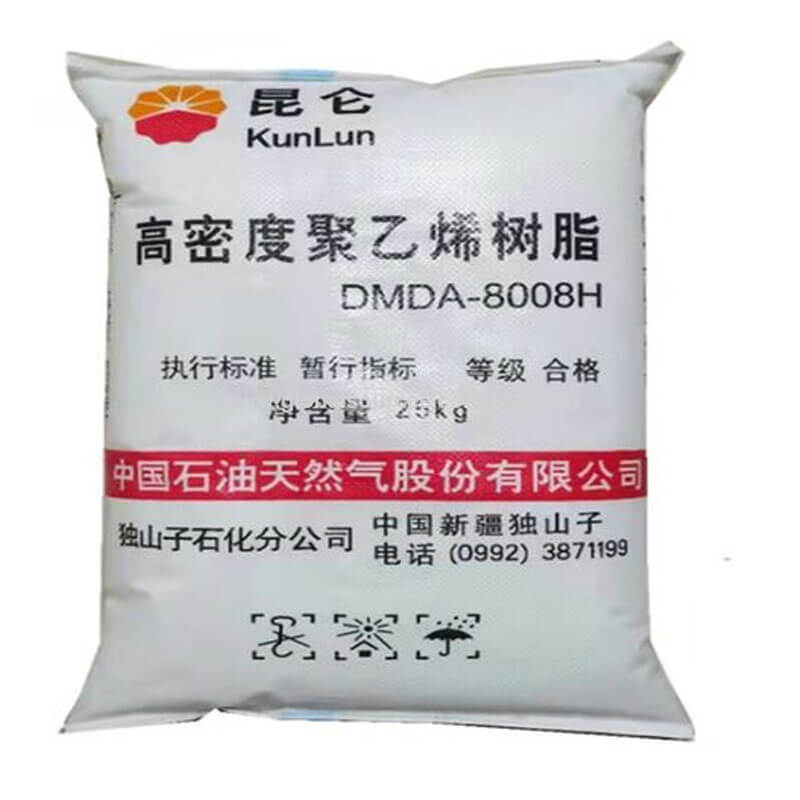
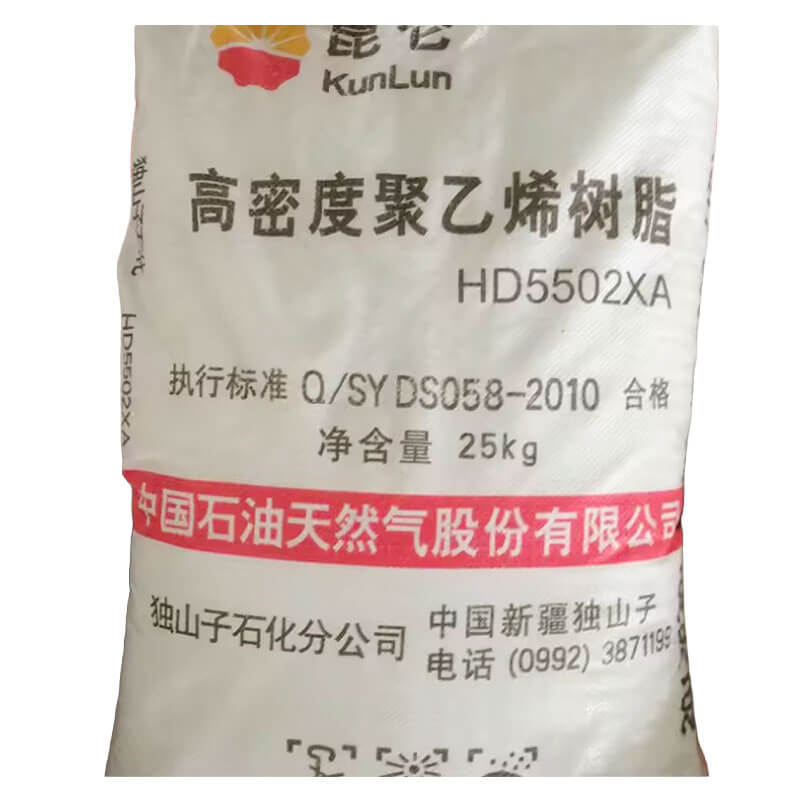
| Packing | High-Density Polyethylene HD5502XA supplied as virgin pellets in 25 kg sealed bags, 1000 kg per shrink-wrapped pallet. |
| Container Loading (20′ FCL) | 20' FCL: HDPE HD5502XA packed in 25 kg bags, palletized, shrink-wrapped, securely stowed for safe transport. |
| Shipping | High-Density Polyethylene (HDPE) HD5502XA ships as non-hazardous, free-flowing pellets. Pack in moisture-proof, DOT-compliant bags or bulk containers. Store away from heat, direct sunlight, and incompatible dusts. Keep dry, avoid airborne dust accumulation, and use proper handling equipment to prevent static discharge. No special transport classification required. |
| Storage | Store HDPE HD5502XA in a dry, clean, well-ventilated area, away from direct sunlight, heat, and ignition sources. Keep in original sealed packaging to prevent moisture uptake and contamination. Avoid dust accumulation and static discharge. Maintain moderate temperatures, separate from oxidizing agents, and follow local regulations for safe handling and storage. |
| Shelf Life | Store in a cool, dry place away from direct sunlight. Shelf life is typically indefinite under proper conditions. |
Passenger car motor oil and industrial hydraulic fluid containers in 1 L, 4 L, and 5 L sizes are blow moulded from HD5502XA at part weights of 28–35 g for 1 L and 85–110 g for 4 L formats. The governing compliance framework for non-dangerous lubricant packaging is transport-simulation based: ASTM D4169-22 distribution cycle, ISO 2234:2000 static stack-load compression, and ASTM D1693-15 ESCR on moulded sidewall coupons under condition B 100% Igepal at 50 °C. Formulation uses 100 parts by weight HD5502XA as base polymer, with high-concentration color masterbatch added at 1.0–2.0 wt% and same-grade flash regrind maintained at 15–20 wt%; no drying is required because HDPE is non-hygroscopic, but stored resin should remain below 0.05 wt% surface moisture to avoid melt-film bubbles. Processing on shuttle blow moulders with 60 mm/24:1 extruders and screw speeds of 35–65 min⁻¹ delivers output of 90–140 kg/h, with melt temperature at 180–195 °C, die temperature 170–190 °C, blow delay 0.8–1.5 s, and hydraulic clamp force of 150–200 kN for 4 L moulds. The parison expands under blow pressure of 0.6–0.8 MPa into water-cooled moulds held at 10–20 °C; post-mould flash is removed by trim presses, and the scrap is granulated to ≤8 mm particles for closed-loop reuse. Field failure data from 4 L lines show that incidental sidewall thinning below 0.9 mm at the lower panel intersection produces buckling failure under stacking loads above 250 kg, so wall distribution must be verified by section-weight analysis after each head change. The terminal formats are narrow-neck, screw-finish lubricant bottles with 38 mm or 63 mm necks, filled at 0.5–1.0 L/s on rotary fillers and sealed with induction liner caps for motor oil, hydraulic fluid, and gear oil.
Blow-moulded containers for household bleach, chlorinated alkaline cleaners, and concentrated surfactants are run from HD5502XA in sizes from 500 mL to 5 L, with wall thicknesses of 0.5–1.2 mm and part weights between 18 g and 75 g. Chemical compatibility data are generated under ASTM D543-20 using 5.25 wt% sodium hypochlorite at 40 °C for 21 days; ESCR testing under ASTM D1693-15 is performed on sidewall specimens after chemical exposure to confirm that F50 time remains above the lot release criterion, rather than testing only virgin resin. The formulation comprises 100 parts by weight HD5502XA, a titanium dioxide white masterbatch at 1.5–2.5 wt%, and a phenolic/phosphate process stabilizer supplement at 0.05–0.15 phr when line regrind exceeds 10 wt%; heavy-metal-containing pigments are excluded to minimize oxidative degradation at the pinch-off weld. Extrusion blow moulding is performed on continuous shuttle machines with 50–70 mm extruders, L/D 22:1 to 24:1, melt temperature 170–185 °C, die temperature 165–180 °C, and mould coolant temperature 10–15 °C. To retain bottle ovality at high output, the pinch-off region is trimmed to a residual flash height of 0.3–0.8 mm; poor weld-line flash control is a known production-scale cause of bottom crease fractures when bottles are drop-filled at 1.2 m. The blow air sequence uses pre-blow at 0.35–0.45 MPa for 0.6–1.0 s, followed by final blow at 0.55–0.70 MPa for 2.0–4.0 s, a two-stage sequence that stabilizes the parison before mould closure and lowers web scrap by 12–18% relative to single-stage blowing on 1 L formats. Terminal parts are narrow-neck bottles with 28 mm, 38 mm, or 45 mm closures, designed for liquid laundry detergents, bleach, and alkaline hard-surface cleaners packaged in low-cost monolayer containers.
For emulsifiable concentrate, suspension concentrate, and solvent-based agrochemical containers between 1 L and 20 L, HD5502XA is blow moulded as a monolayer article and subsequently surface-fluorinated to reduce solvent permeation and paneling. The applicable performance regime is UN 3H1 certification under the UN Model Regulations Chapter 6.1 for packing groups II and III, supported by ADR and IMDG Code requirements for carriage of liquid agrochemicals, and by ISO 16103:2005 where regrind from fluorinated containers is evaluated. HD5502XA is formulated at 100 parts by weight as the base resin; an ultraviolet absorber/hindered amine light stabilizer masterbatch is incorporated at 2.0–3.0 wt% for containers stored outdoors in farm depots, and internal regrind is limited to 10 wt% because fluorinated regrind can reduce melt homogeneity at the pinch-off weld. Moulding is carried out on accumulator blow moulders with 70–90 mm extruders and 25:1 L/D, melt temperature 175–195 °C, die gap 1.8–3.5 mm, mould temperature 12–20 °C, and blow pressure 0.6–0.8 MPa; for 5 L containers, cycle time is 25–40 s, with the parison programmer set to thicken the upper shoulder and bottom chime to 1.8–2.2 mm while the label panel remains 1.0–1.2 mm. After cooling and trimming, containers are fluorinated in an in-line chamber with 0.5–1.0% fluorine in nitrogen at 25–40 °C for 120–180 s, producing a modified inner layer that reduces permeation of xylene, toluene, and cyclohexanone-based carriers; permeation verification is performed by ASTM D2684-18 or by weight-loss protocols agreed with the filler. Terminal types include 1 L, 5 L, 10 L, and 20 L UN-approved jerrycans and jugs for pesticide formulations requiring hydrocarbon solvent resistance, vapor barrier control, and outdoor ultraviolet robustness.
HD5502XA is used for blow-moulded AUS 32 diesel exhaust fluid containers in 5 L, 10 L, and 20 L sizes, where material cleanliness and low-leachable additive selection are regulated by ISO 22241-3:2019 and the end-use fluid limits in ISO 22241-1:2019. Blending for DEF service uses 100 parts by weight HD5502XA with a low-leachable white masterbatch at 2.0 wt%; calcium stearate and sodium-based neutralizers are excluded or replaced by a synthetic hydrotalcite acid scavenger at 0.05–0.10 phr because cation release into urea solution can exceed the permitted sodium, potassium, and calcium thresholds during long-term storage at 35 °C. Moulders run the grade on extrusion blow moulding platforms with screw L/D 24:1 and melt temperatures of 175–190 °C, die temperatures of 170–185 °C, and blow pressure 0.6–0.8 MPa; mould cooling at 10–20 °C is specified to control shrinkage and maintain neck-finish dimensions for 45 mm and 63 mm closures. Production-scale data show that mould temperatures above 25 °C increase neck diameter variation beyond ±0.15 mm, causing filler-line cap torque rejection. The process includes post-mould dust removal and internal draining of blow air condensate because retained water can raise AUS 32 dilution or introduce particle contamination; filled containers require a headspace volume of 5–7% to accommodate freeze expansion at -11.5 °C, the crystallization point of AUS 32. Terminal products are rectangular and round HDPE containers with induction-sealed caps, used for aftermarket and workshop diesel exhaust fluid distribution.
In 5 L, 10 L, and 20 L industrial containers for water-miscible metalworking fluids, glycol-based engine coolants, and alkaline cleaning concentrates, HD5502XA is processed on shuttle or accumulator blow moulding lines with 60–80 mm extruders. These fluids are non-ADR for transport but require long-term chemical resistance and resistance to environmental stress cracking, so qualification uses ASTM D1693-15 ESCR, ASTM D543-20 chemical immersion, and ASTM D4169-22 transport simulation. Formulation starts with 100 parts by weight HD5502XA; color masterbatch is added at 1.0–2.0 wt% and same-grade regrind at 20 wt%, while regrind from fluid-contaminated or wash-line scrap is excluded to avoid introducing ester-based metalworking fluid residues that alter weld-line strength. Melt temperature is controlled at 175–190 °C, mould temperature at 12–18 °C, and blow pressure at 0.55–0.75 MPa; for 20 L containers, cycle times of 110–150 s are typical when cooling is assisted by internal post-blow air at 0.4–0.5 MPa for 8–12 s. The critical process defect at this scale is bottom pinch-off cleanliness: a poorly trimmed pinch-off with tail height above 0.8 mm promotes wicking of coolant concentrate into the weld region, which in turn accelerates environmental stress cracking at the seam. Terminal outputs are rectangular HDPE jerrycans or jugs with 45 mm and 63 mm necks, used for engine coolant, water-miscible cutting fluids, and industrial cleaning compounds.
Competitive High‑Density Polyethylene (HDPE) HD5502XA prices that fit your budget—flexible terms and customized quotes for every order.
For samples, pricing, or more information, please contact us at +8618136850665 or mail to sales4@ascent-chem.com.
We will respond to you as soon as possible.
Tel: +8618136850665
Email: sales4@ascent-chem.com
Flexible payment, competitive price, premium service - Inquire now!
High-Density Polyethylene (HDPE) HD5502XA is a bimodal high-molecular-weight copolymer supplied as pellet form for extrusion blow moulding of containers in the 5 L to 60 L range. The resin is produced in a tandem loop-slurry/gas-phase reactor system, which yields a controlled bimodal molar mass distribution. This architecture differentiates HD5502XA from conventional unimodal blow moulding grades by increasing the tie-molecule concentration and low-shear viscosity without reducing the melt flow rate below processable limits. The nominal melt flow rate is 0.30 g/10 min at 190 °C under 2.16 kg piston load as specified in ISO 1133-1:2022, and the nominal density is 0.955 g/cm³ by ISO 1183-1:2019. Typical end uses include jerry cans for agrochemicals, industrial chemical containers, lubricant bottles, and intermediate bulk containers where environmental stress crack resistance and low-temperature drop impact are critical. The bimodal distribution provides higher melt strength than a unimodal HDPE of equal melt flow rate, but it also raises the extruder torque and requires a slightly higher melt temperature under the same throughput.
The parison stability of HD5502XA is governed by the high-molar-mass tail of the bimodal distribution. Capillary rheometry according to ISO 11443:2021 at 190 °C shows that the shear viscosity falls from 9.0×10⁴ Pa·s at 0.01 s⁻¹ to 1.0×10³ Pa·s at 100 s⁻¹. This shear-thinning index is steeper than that of a conventional unimodal blow moulding HDPE with the same melt flow rate. The practical effect is a longer parison hang time without necking: on a shuttle blow moulding machine with a 60 mm grooved-feed extruder and L/D 24:1, a 500 mm parison can be extruded at 30 kg/h without measurable sag when the melt temperature is held at 190 °C to 200 °C. At apparent die-lip shear rates below 500 s⁻¹, melt fracture is absent; at shear rates above 800 s⁻¹, shark-skin texture may appear on the parison surface of this resin class. Published data for the specific onset of melt fracture in HD5502XA at intermediate shear rates is limited, and die geometry is the dominant variable.
Extensional strain hardening is measurable by a Sentmanat extensional rheometer; the transient extensional viscosity at 0.1 s⁻¹ and 190 °C increases by a factor of 4 to 6 relative to the linear viscoelastic envelope after 1 s of extension. This strain hardening suppresses parison draw resonance and improves wall-thickness uniformity in containers with handle pinch-offs and offset necks. The die gap must be set 0.2 mm to 0.4 mm narrower than for a unimodal HDPE because the parison swell of HD5502XA is 10% to 15% higher under identical extrusion conditions.
Table 1 consolidates the typical property values used in container design calculations. The tensile yield stress is measured on ISO 527-2:2012 type 1A specimens at 23 °C and 50 mm/min. The flexural modulus is obtained according to ISO 178:2019 at 2 mm/min crosshead speed. The notched Izod impact is reported at 23 °C and -20 °C using ASTM D256-23. The ESCR is evaluated under ASTM D1693-15 condition A and condition B; the condition B value is more discriminating for chemical container service. The Vicat softening point and heat deflection temperature are not direct service-temperature limits but are used for comparing short-term thermal resistance.
| Property | Test method | Typical value |
|---|---|---|
| Melt flow rate, 190 °C/2.16 kg | ISO 1133-1:2022 | 0.30 g/10 min |
| Density | ISO 1183-1:2019 | 0.955 g/cm³ |
| Tensile stress at yield | ISO 527-2:2012 | 27 MPa |
| Tensile strain at break | ISO 527-2:2012 | >600% |
| Flexural modulus | ISO 178:2019 | 1100 MPa |
| Notched Izod impact, 23 °C | ASTM D256-23 | 15 kJ/m² |
| Notched Izod impact, -20 °C | ASTM D256-23 | 8 kJ/m² |
| ESCR F50, 10% Igepal CO-630, 50 °C | ASTM D1693-15 | >300 h |
| ESCR F50, 100% Igepal CO-630, 50 °C | ASTM D1693-15 | >100 h |
| Vicat softening point, 10 N | ISO 306:2022 | 126 °C |
| Heat deflection temperature, 0.45 MPa | ISO 75-2:2013 | 74 °C |
These values are typical and are not release limits. Batch-to-batch variation on commercial production lines is generally within ±3% for melt flow rate and ±0.002 g/cm³ for density; the ESCR failure time may vary by a factor of 2 because of the statistical nature of slow crack growth. The top-load capacity of a 20 L jerry can with a 1.8 mm nominal wall thickness is typically 10 kN to 12 kN when compressed at 25 mm/min according to ISO 12048:2000.
The dominant service failure mechanism for blow-moulded HDPE containers is environmental stress cracking, not brittle fracture. HD5502XA is formulated to increase the tie-molecule concentration in the amorphous region, which reduces the craze-to-crack transition rate. Under ASTM D1693-15 condition B with 100% Igepal CO-630 at 50 °C, the F50 failure time is greater than 100 h. Under condition A with 10% Igepal, the F50 exceeds 300 h. This performance is higher than conventional unimodal HDPE blow moulding grades of the same density, which typically fail between 20 h and 40 h in condition B. The slow crack growth resistance is further tested using the full notch creep test according to ISO 16770:2004, where the time to brittle failure in a notched specimen is used as a ranking parameter for aggressive media.
Chemical compatibility is influenced by the crystallinity and the absence of low-molecular-weight extractables. HD5502XA can be used for packaging of non-oxidising mineral acids up to 20 wt% at 40 °C, alkalis up to 40 wt% at 50 °C, aliphatic hydrocarbons, ester-based lubricants, and surfactant solutions. Continuous contact with oxidising acids above 65 wt% or halogenated solvents above 40 °C is outside the recommended envelope because the polar and swelling interactions accelerate craze initiation. No universal chemical resistance table exists for this specific resin; a compatibility test in the actual formulation at 50 °C for 30 days is required for new containers.
Substitution of a conventional unimodal HDPE by HD5502XA on a Kautex KCC20 shuttle blow moulding line with a 60 mm grooved-feed extruder and L/D 24:1 requires a barrel temperature profile of 170 °C/180 °C/190 °C/195 °C/200 °C and a die-head temperature of 195 °C to 205 °C. The screw speed is typically reduced by 5% to 10% relative to the unimodal reference to maintain the same parison length because the melt viscosity is higher. Die swell is 10% to 15% greater, so the die gap is reduced from 1.8 mm to 1.6 mm for a 20 L jerry can. The resulting wall thickness distribution improves at the pinch-off and handle regions, and the drop impact resistance at -20 °C increases from 3 m to 6 m in the ISO 2248:2001 drop test when the container is filled with 80% water and conditioned at -20 °C for 24 h. No melt fracture is observed at a parison extrusion rate of 30 kg/h, and the cycle time remains 65 s to 70 s for the 20 L container.
The main operational boundary is the melt temperature window. Below 180 °C, the extruder torque on a 75 kW drive rises above 70% and the parison surface may show shark-skin texture. Above 210 °C, the parison sag increases and the wall thickness at the lower end of a 500 mm parison grows by 0.2 mm to 0.4 mm. Cooling water for moulds is maintained at 15 °C to 25 °C; higher mould temperatures reduce the pinch-off weld strength as measured by a 90° peel test at 23 °C. Moisture absorption is not a limiting factor under normal indoor storage, but if condensation forms on cold pellets at relative humidity above 60%, pre-drying at 80 °C for 2 h in a desiccant dryer is recommended to avoid surface streaks.
Table 2 compares HD5502XA with a conventional unimodal HDPE blow moulding grade of similar density and melt flow rate and with a high-ESCR bimodal HDPE used for chemical containers. The comparative values are indicative of the performance differences that affect container design and processing.
| Parameter | HD5502XA | Conventional unimodal HDPE | High-ESCR bimodal HDPE |
|---|---|---|---|
| Melt flow rate, 190 °C/2.16 kg | 0.30 g/10 min | 0.35 g/10 min | 0.25 g/10 min |
| Density | 0.955 g/cm³ | 0.954 g/cm³ | 0.952 g/cm³ |
| Flexural modulus | 1100 MPa | 950 MPa | 900 MPa |
| Notched Izod impact, 23 °C | 15 kJ/m² | 8 kJ/m² | 20 kJ/m² |
| Notched Izod impact, -20 °C | 8 kJ/m² | 4 kJ/m² | 12 kJ/m² |
| ESCR F50, 100% Igepal | >100 h | 20–40 h | >500 h |
| Top-load capacity, 20 L jerry can, 1.8 mm wall | 10–12 kN | 8–10 kN | 9–11 kN |
| Drop impact, -20 °C, ISO 2248:2001 | 6 m | 3 m | 7 m |
The comparative data show that HD5502XA occupies an intermediate position between a conventional unimodal blow moulding grade and a high-ESCR bimodal grade for severe chemical service. The higher notched Izod and ESCR relative to the unimodal grade are obtained with a modest increase in extruder torque and die swell. The property set is therefore selected for containers that require toughness and chemical resistance but do not justify the higher cost and lower stiffness of a very-high-ESCR grade.
Incoming resin control on a production line requires the measurement of melt flow rate and density on every lot because the high-molecular-weight fraction can shift during reactor transitions. A 50 tonne injection moulding machine with a 2 mm plaque tool is used to prepare specimens for density and ESCR testing. The moisture content of pellets stored in outdoor silos can exceed 300 ppm after 48 h at relative humidity above 70%; this is not chemically bound water but surface condensation, and it produces surface splay on the parison if not removed. The recommended incoming moisture specification is below 200 ppm by Karl Fischer titration or by weight loss at 105 °C for 2 h. Blending with regrind is limited to 30 wt% of clean internal scrap to preserve the ESCR margin, as higher regrind levels reduce the F50 time by 20% to 30% under ASTM D1693-15 condition B.
In mould design for HD5502XA, the pinch-off insert is specified with a 0.3 mm to 0.5 mm blade width and a 45° to 60° entry angle to ensure adequate flash removal without creating a notch. The high-molecular-weight fraction increases the melt elasticity, so the flash is tougher and the deflashing station requires a cutting force of 80 N to 120 N per linear millimetre at 23 °C. Venting of the mould cavity is set to 0.02 mm to 0.04 mm to prevent air entrapment at the bottom corners; insufficient venting produces burn marks and reduces the drop impact at -20 °C by 15% to 20%.
HD5502XA is typically supplied without intentional addition of heavy-metal catalysts, and the base olefin polymer may meet the composition requirements of EU 10/2011 for plastic food-contact materials and 21 CFR 177.1520 for olefin polymers when the manufacturer’s conformity declaration covers the specific lot. However, the typical applications of this grade are industrial and agrochemical packaging, not direct food contact, because the external additives and colour masterbatches used in container fabrication are not food-contact certified. Verification of compliance with REACH and RoHS requires the supplier’s extended safety data sheet and the lot-specific certificate of analysis.
In accumulator-head machines producing 30 L to 60 L containers, the parison drop time must be shorter than the sag-limited time of the resin. The sag-limited time for HD5502XA at 190 °C is approximately 12 s to 14 s for a 50 cm parison with an average wall thickness of 4 mm. The accumulator filling time is set to 8 s to 10 s, and the parison is inflated within 2 s after the mould closes. This sequence prevents the lower parison end from thinning below 2.8 mm in a 60 L drum. The blowing pressure is maintained at 0.6 MPa to 0.8 MPa, and the blow pin is cooled to 10 °C to 15 °C to stabilise the neck finish.