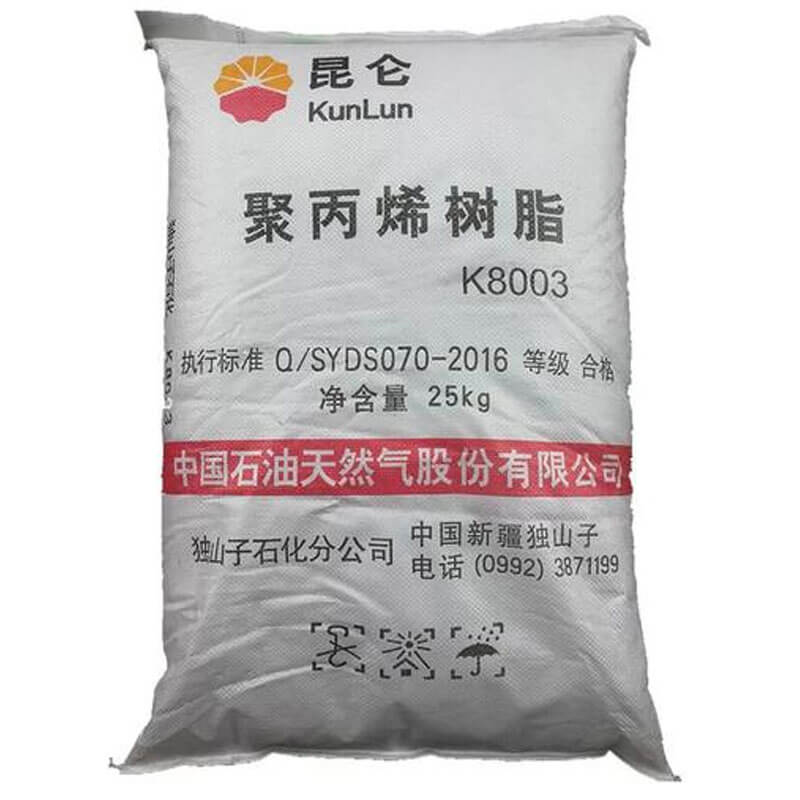
Polypropylene K8003

    • Product Name: Polypropylene K8003
    • Factroy Site: No. 6 Beijing Road, Dushanzi, Xinjiang
    • Price Inquiry: sales4@ascent-chem.com
    • Manufacturer: PetroChina Dushanzi Petrochemical Company
    • CONTACT NOW
    Specifications
    HS Code 215849
    Product Name Polypropylene K8003
    Material Type Impact Polypropylene Copolymer
    Density 0.90 g/cm³
    Melt Flow Rate 2.5 g/10min (230°C, 2.16kg)
    Tensile Strength At Yield 24 MPa
    Elongation At Break 200%
    Flexural Modulus 1050 MPa
    Izod Impact Notched 23c 55 kJ/m²
    Izod Impact Notched Minus20c 8 kJ/m²
    Heat Deflection Temperature 0 45mpa 85°C
    Vicat Softening Temperature 150°C
    Rockwell Hardness R85
    Melting Point 165°C

    As an accredited Polypropylene K8003 factory, we enforce strict quality protocols—every batch undergoes rigorous testing to ensure consistent efficacy and safety standards.

    Packing & Storage
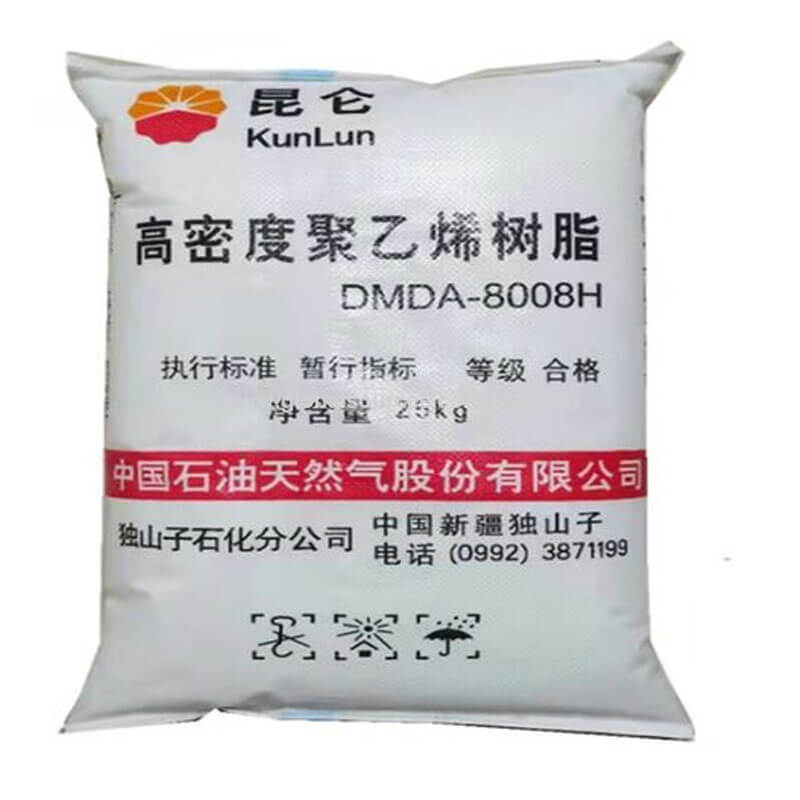
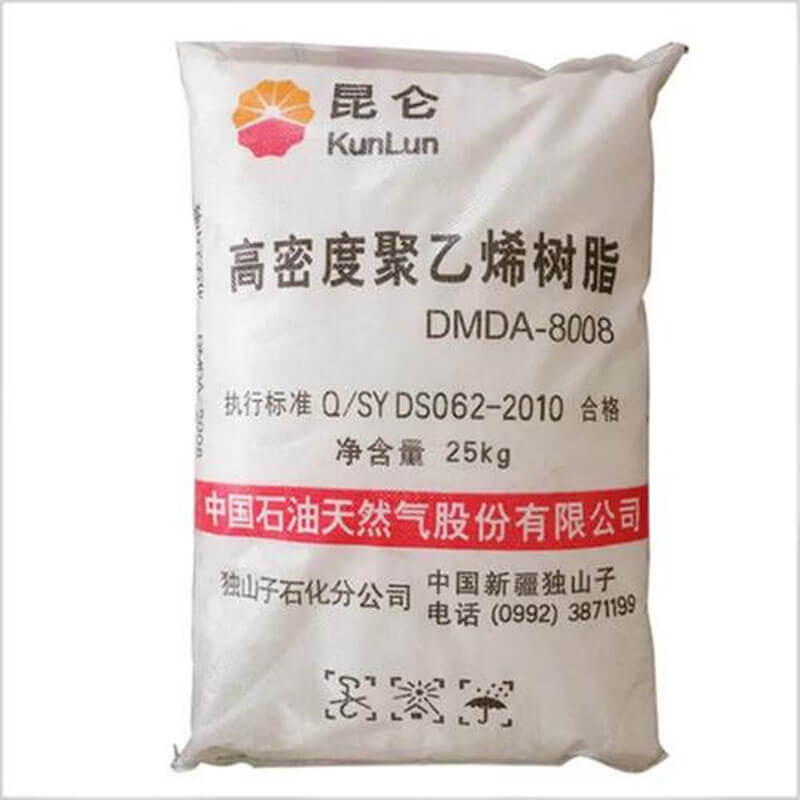
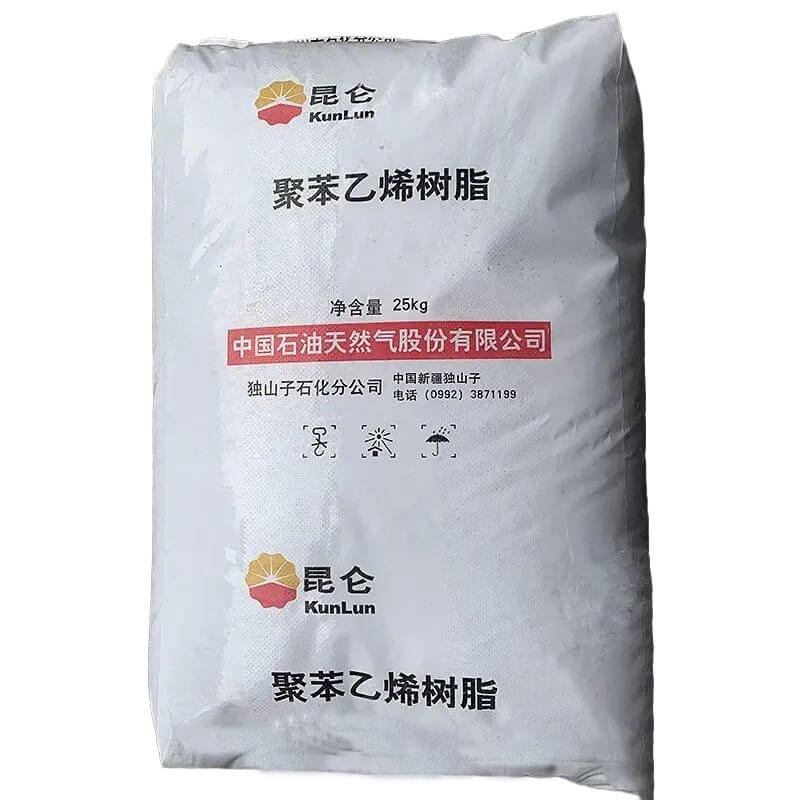
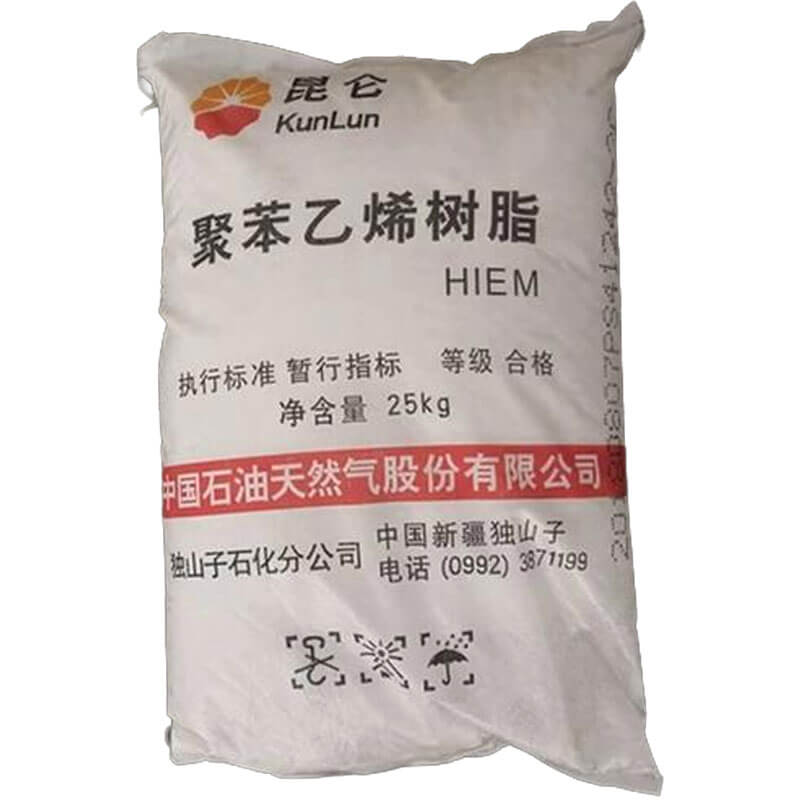
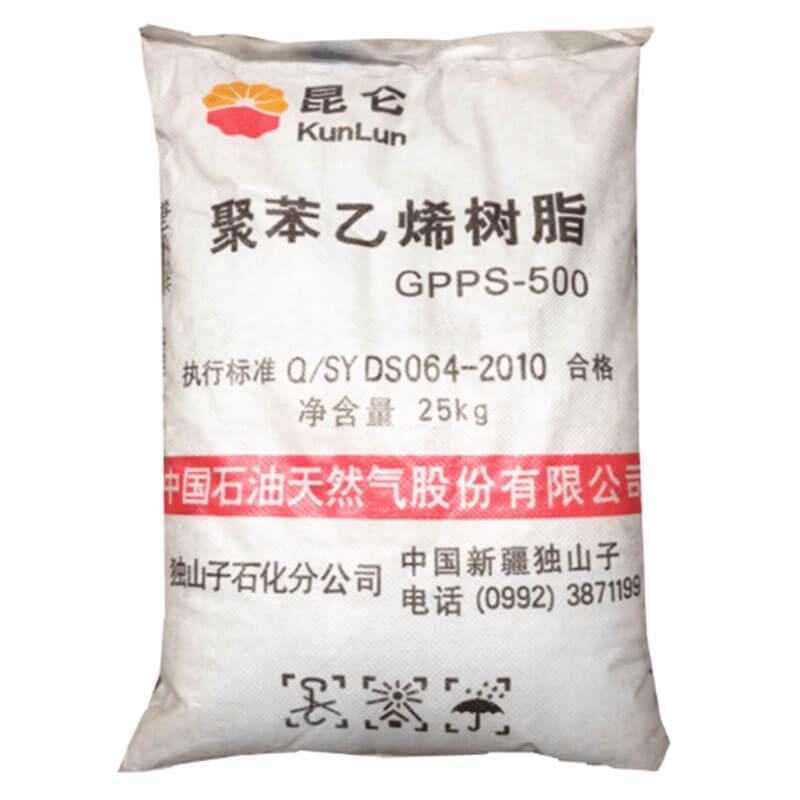
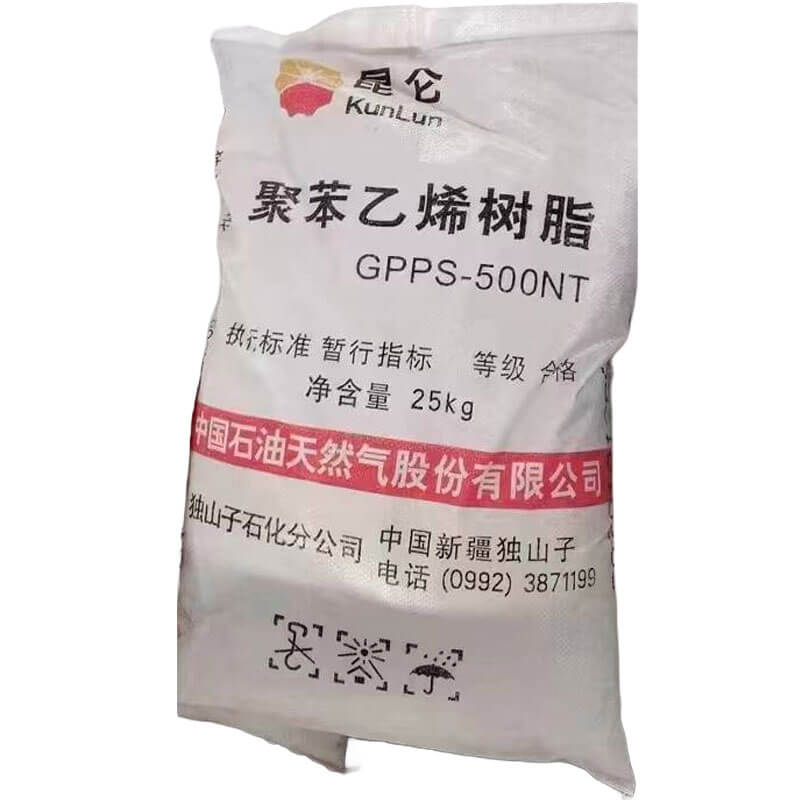
    Packing Polypropylene K8003 is supplied in 25 kg laminated woven bags with moisture-proof liners, palletized and shrink-wrapped for safe transport.
    Container Loading (20′ FCL) Polypropylene K8003 is loaded in a 20′ FCL, typically packed in 25 kg bags, around 20 metric tons per container.
    Shipping Polypropylene K8003 is shipped as non-hazardous plastic granules in sealed woven bags, bulk bags, or containers lined with polyethylene. Keep away from heat, ignition sources, and excessive moisture. Store in a cool, dry, ventilated area. Not regulated under IMO/ADR dangerous goods rules, but handle gently to avoid bag damage.
    Storage Store Polypropylene K8003 in a cool, dry, well-ventilated area away from direct sunlight, heat sources, and open flames. Keep original containers tightly sealed to prevent moisture uptake and contamination. Avoid prolonged UV exposure, which can degrade the material. Maintain stable temperatures and protect from mechanical damage. Under proper conditions, shelf life is typically several years.
    Shelf Life Store in a cool, dry place away from sunlight. Shelf life is typically 12 months from production date when unopened.
    Application of Polypropylene K8003

    Polypropylene K8003 is a heterophasic polypropylene impact copolymer with a melt mass-flow rate of 2.0–3.0 g/10 min under ISO 1133-1:2022 at 230 °C and 2.16 kg. The dispersed ethylene-propylene rubber phase, typically present at 15–25 wt% of the polymer composition, generates the low-temperature ductility that separates K8003 from polypropylene homopolymer grades. Downstream processing therefore centres on injection moulding and melt compounding, not film or fibre extrusion, because the heterophasic morphology produces a broad melting range and reduced drawability.

    What constrains low-temperature impact retention in injection-moulded wheel arch liners?

    In wheel arch liner campaigns, K8003 is injection moulded with a melt temperature measured at the nozzle of 220–230 °C and a mould surface temperature held at 30–50 °C. Industrial compliance for the final part typically includes material designation under ISO 19069-2:2016, flammability according to FMVSS 302 or ISO 3795, weathering verification under ISO 4892-2:2013 cycle 1, and heavy-metal restrictions under ELV 2000/53/EC Annex II. The formulation addition ratio places talc masterbatch at 10–18 wt%, carbon black masterbatch at 2–3 wt%, and processing stabilizer at 0.2–0.5 wt%, with K8003 as the balance to 100 wt%; talc stiffness offsets the moderate flexural modulus of the impact copolymer, while carbon black supplies weatherability but shortens heat-aging margin if overdosed above 3 wt%. Production tooling generally operates with valve-gated cold runners or hot runners, a fill time of 1.5–2.5 s, holding pressure of 35–55 MPa hydraulic, and screw decompression of 3–5 mm to avoid nozzle drool. The terminal product range includes wheel arch liners, engine splash shields, and underbody airflow panels. The principal processing boundary is weld-line sensitisation at ribs and gate junctions; mould temperatures below 25 °C cause a discontinuous drop in impact energy at weld lines, which is masked in ISO 179-1:2023 Charpy tests because the weld line is not sampled.

    Deep-draw outer tub tooling on horizontal clamping units above 1,600 t places a different demand on K8003 than automotive thin-wall work; the dominant variable is cooling-induced shrinkage across a 3.0–4.5 mm sidewall. Commercial washing machine outer tub compounds built on K8003 routinely dilute the base resin with 25–35 wt% calcium carbonate or talc masterbatch and 1–2 wt% antioxidant/acid scavenger, leaving K8003 as the balance to 100 wt%. Compliance for the moulded tub references IEC 60335-1:2020 for household appliance safety, UL 94 HB at 3.0 mm for flammability class, and REACH 1907/2006 substance restrictions for mechanical recycling and incineration routes. The production process uses sequential valve-gate filling from an outer perimeter to a central hub, barrel zones set from 200 °C at feed to 230 °C at nozzle, mould cooling at 20–40 °C, and holding pressure at 45–70 MPa for packing out ribs and the bearing boss. Terminal products are outer tubs, base frames, and counterweight housings. A practical limitation is that talc loadings above 35 wt% reduce impact-copolymer ductility enough to crack around the spin basket mounting points during shipping vibration; published data for this specific tub configuration is limited, so the ratio must be confirmed by instrumented puncture under ISO 6603-2:2023 before locking the specification.

    Power tool battery pack shells and the gating of medium-flow impact copolymer

    When battery pack shells are moulded in K8003, gate design rather than barrel temperature controls short-shot incidence and weld strength. Thin-wall tooling with nominal wall thickness 2.0–3.0 mm is run at melt temperature 210–235 °C, mould temperature 25–40 °C, and injection velocity above 80 mm/s; a single-point hot tip gate is used for compact shells, while larger packs require two valve-gated drops to avoid flow-length exceedance. Compliance is driven by UL 94 HB at 1.5 mm, 2011/65/EU RoHS for restricted substances, and ISO 180:2023 Izod notched impact at -30 °C if fall resistance is specified. Formulation addition ratios for a drop-resistant shell are ethylene-octene impact modifier at 8–12 wt%, nucleator masterbatch at 0.5–1.5 wt%, and carbon black at 1–2 wt%, with K8003 as the balance to 100 wt%; the additional polyolefin elastomer lowers modulus but preserves ductility at sub-zero temperatures. Terminal product types include cordless drill battery pack enclosures, charger bases, and impact driver handles. The processing boundary concerns residence time: when cycle interruption keeps melt above 220 °C for more than 8 min, the melt flow rate increases beyond the 2.0–3.0 g/10 min specification, and pack shells begin to flash at the parting line and lose dimensional stability at the latch interface.

    A pallet moulding cell with accumulator-assisted injection and a 20,000–30,000 g shot weight exposes K8003 to residence time conditions that differ sharply from small-component work. In this segment K8003 is blended with 25–35 wt% post-industrial K8003 regrind and 2–4 wt% UV stabilizer masterbatch, leaving virgin K8003 as the balance to 100 wt%; the regrind fraction is added by gravimetric dosing to the machine throat. Compliance for export pallets includes load performance verification under ISO 8611-1:2011, food-contact suitability under 21 CFR 177.1520 if crates are used for produce handling, and migration limits under EU 10/2011 for food-contact articles. The downstream process uses a single-stage reciprocating screw with low compression ratio 2.0:1–2.2:1, barrel temperatures 210–240 °C, mould temperature 15–30 °C, and cooling time 70–120 s depending on rib thickness; gas counterpressure is employed in some cells to reduce sink marks over the fork entry apertures. Terminal products are export pallets, vented produce crates, and foldable logistics sleeves. The main incompatibility is the presence of post-consumer polyethylene contamination above 5 wt%; it co-crystallises and reduces flexural modulus while increasing warpage after outdoor storage, requiring incoming regrind sorting by FTIR or melt-flow segregation.

    When sulphuric acid contact demands insert integrity in SLI battery containers

    When K8003 is filled into multi-cavity battery container moulds, the primary processing risk at the lead insert is not simple shrinkage but differential cooling along the insert wall; this creates an anisotropic stress field that can initiate micro-cracks around the terminal after the filling operation. Compliance for starter battery containers references SAE J537:2016 for starting battery design and testing, UL 94 HB at 3.0 mm for electrical enclosure flammability, and IEC 60254-1:2005 if the container is used in traction cells. The addition ratio is deliberately filler-free: carbon black masterbatch at 1–2 wt%, hindered phenolic antioxidant at 0.2–0.4 wt%, and nucleating agent at 0.05–0.15 wt%, with K8003 as the balance to 100 wt%. The injection moulding process uses a two-stage clamp with core-out ejection, melt temperature at the nozzle 215–235 °C, mould temperature 40–60 °C to raise crystalline uniformity, injection pressure 70–100 MPa, and holding time 15–25 s for a wall thickness of 2.8–4.0 mm. Terminal products are prismatic polypropylene jars and lids for automotive SLI and deep-cycle batteries. The important boundary condition is that mould release agents containing phthalate plasticizers must be avoided; long-term acid contact at 65 °C extracts these additives, leaving surface microvoids that reduce seal integrity.

    Compounding K8003 into TPO pellets with co-rotating twin-screw extrusion

    Twin-screw compounding of K8003 into filled TPO compounds is carried out on co-rotating units with L/D 40–48, segmented screw profiles, and side feeders for talc. A standard automotive TPO formulation uses ethylene-octene polyolefin elastomer at 15–25 wt%, talc at 10–20 wt%, and stabilizer masterbatch at 0.5–1.5 wt%, with K8003 as the balance to 100 wt%; the elastomer is fed at the main throat as pellet pre-blend, while talc enters at 55–65% of screw length to limit barrel wear and dispersion power. Compliance for the pellet is often defined by ISO 19069-2:2016 for polypropylene moulding materials, RoHS 2011/65/EU for substance restrictions, and REACH 1907/2006 Article 33 communication obligations. The compounding process runs at melt temperature 190–220 °C, screw speed 300–600 rpm, specific energy input 0.18–0.25 kWh/kg, and vacuum venting at -0.8 bar gauge; underwater pelletising produces cylindrical pellets with bulk density 0.50–0.62 g/cm³. Terminal articles made from the resulting TPO pellets include rocker covers, cowl grilles, and interior pillar trim. A critical boundary is moisture: pellets stored outside at relative humidity above 60% must be pre-dried at 80 °C for 2–4 h before compounding, because hydrolytic chain scission of the impact copolymer increases melt flow rate and lowers Charpy impact by more than 10% in the finished part.

    Free Quote

    Competitive Polypropylene K8003 prices that fit your budget—flexible terms and customized quotes for every order.

    For samples, pricing, or more information, please contact us at +8618136850665 or mail to sales4@ascent-chem.com.

    We will respond to you as soon as possible.

    Tel: +8618136850665

    Email: sales4@ascent-chem.com

    Inquiry

    Get Free Quote of PetroChina Dushanzi Petrochemical Company

    Flexible payment, competitive price, premium service - Inquire now!

    Certification & Compliance
    More Introduction

    Polypropylene K8003 is a heterophasic impact copolymer in which a continuous isotactic polypropylene homopolymer matrix surrounds a dispersed ethylene-propylene rubber phase. The grade is typically specified by a melt mass-flow rate of 2.2–2.8 g/10 min at 230 °C/2.16 kg under ISO 1133-1:2022, placing it in the medium-flow class for injection moulding and profile extrusion. The dispersed rubber phase is responsible for low-temperature ductility, while the homopolymer matrix maintains tensile yield stress, flexural modulus, and upper service temperature. Table 1 consolidates property data reported on normalized injection-moulded specimens; the values are typical lot averages rather than guaranteed specification limits.

    PropertyTest methodTypical reported rangeUnit
    Melt mass-flow rate, 230 °C/2.16 kgISO 1133-1:20222.2–2.8g/10 min
    DensityISO 1183-1:20190.900–0.910g/cm³
    Tensile yield stress, type 1A, 50 mm/minISO 527-2:201224–26MPa
    Tensile strain at yieldISO 527-2:20125–6%
    Flexural modulus, 2 mm/minISO 178:20191100–1250MPa
    Charpy notched impact strength, 23 °CISO 179-1/1eA:201030–45kJ/m²
    Charpy notched impact strength, −20 °CISO 179-1/1eA:20105–8kJ/m²
    Vicat softening temperature, A50, 10 NISO 306:2022150–153°C
    Heat deflection temperature, 0.45 MPaISO 75-2:201375–85°C
    Mould shrinkageISO 294-4:20181.4–1.8%

    Because K8003 is a reactor-blended impact copolymer, the ratio of ethylene-propylene rubber to polypropylene matrix is not controlled by post-reactor compounding alone. Independent melt-state rheology and solid-state mechanical testing are therefore necessary when a converter qualifies a new lot. Public datasheets do not provide a single molecular weight or rubber content specification for K8003; published data for lot-specific rubber phase content are limited.

    How Does K8003 Differ from Homopolymer and Random Copolymer Grades?

    Shifting from a 2.0–3.0 g/10 min homopolymer polypropylene to K8003 lowers tensile yield stress and flexural modulus but raises cold-temperature impact resistance. Standard values for a homopolymer polypropylene with similar melt mass-flow rate are normally 31–35 MPa tensile yield stress and 1300–1500 MPa flexural modulus, whereas K8003 reports 24–26 MPa and 1100–1250 MPa. The notched Charpy impact at −20 °C provides the primary differentiation: homopolymer polypropylene may fall below 2 kJ/m², while K8003 remains in the 5–8 kJ/m² band under ISO 179-1/1eA:2010. This shift is attributable to the elastomeric dispersed phase rather than to plasticizer addition.

    Compared with a propylene random copolymer of equivalent melt mass-flow rate, K8003 loses optical clarity and heat-seal behaviour. A random copolymer melting peak measured by ISO 11357-3:2018 is commonly 130–145 °C, whereas the homopolymer-rich K8003 matrix produces a melting peak near 160–165 °C. The higher melting temperature supports greater upper service temperature and stiffness; the heterophasic structure reduces low-temperature brittleness without sacrificing the continuous polypropylene phase.

    High-flow impact copolymer grades with melt mass-flow rates of 10–25 g/10 min under ISO 1133-1:2022 allow faster cavity filling and shorter holding-pressure times but often exhibit lower weld-line strength. K8003, with its medium-flow viscosity, is preferred for parts with wall thickness above 2.5 mm where impact resistance at knit lines is critical. The lower melt mass-flow rate also supports profile extrusion, blow moulding and sheet thermoforming, which are not reliably operated with high-flow grades due to sag and low melt strength.

    Processing of K8003 should begin from measured melt density and specific heat, but public datasheets do not provide a complete viscosity curve. A capillary rheometer sweep at 220 °C, 240 °C, and 260 °C is recommended before mould-filling simulation. The measured data are fitted to a Cross-WLF or Bird-Carreau model because the power-law approximation is insufficient in the low-shear regime encountered in thick-wall pack-and-hold phases. For injection moulding, the melt temperature window measured at the nozzle is 220–250 °C. Barrel zones should be profiled from 190 °C at the feed throat to 230–250 °C at the metering zone. At melt temperatures above 260 °C, ethylene-propylene rubber domains can coalesce, and the notched Charpy impact at −20 °C can fall below 5 kJ/m² under ISO 179-1/1eA:2010. This is a processing boundary, not a theoretical degradation point; the actual value depends on residence time and screw recovery conditions.

    Mould temperatures between 20 °C and 50 °C are typical. For wall thickness above 3 mm, a mould temperature of 40–50 °C increases crystallinity and reduces post-moulding shrinkage to the lower end of the 1.4–1.8 % range reported under ISO 294-4:2018. Lower mould temperatures shorten cycle time but can freeze oriented polymer at the gate, raising internal stress and environmental stress cracking risk. Pre-drying is not mandatory for sealed, dry pellets. If the pellets have been exposed to relative humidity above 60 % RH for more than 2 h, desiccant drying at 80 °C for 2–4 h to a dew point of −30 °C or lower prevents splay and inconsistent shot weight.

    Single-screw plasticating units with L/D 20–25 and compression ratio 2.5:1–3.0:1 are suitable. A general-purpose screw with a gradual transition zone is preferred over a high-shear barrier screw because excessive shear in the feed transition can reduce surface elastomer particle size and lower impact resistance. Some moulders report that compression ratios above 3.5:1 reduce notched Charpy impact by inducing shear heating; published data for this specific configuration on K8003 are limited. Controlled-rheology visbreaking is possible with peroxide masterbatch in a co-rotating twin-screw extruder of L/D 40:1, but the shear and temperature profile must keep the melt below 240 °C to avoid rubber-phase crosslinking that increases gel count. If maldistribution occurs, filter-pressure rise and surface gels are observed on the line.

    When Low-Temperature Impact Resistance Dictates the Material Selection Matrix

    Instrument-panel carriers and door-panel substrates are moulded in tooling with clamp force from 8,000 kN to 20,000 kN. K8003 is specified when the OEM standard requires a notched Charpy impact at −20 °C of at least 5 kJ/m² under ISO 179-1/1eA:2010. The medium melt mass-flow rate permits filling of long flow paths without excessive molecular weight loss from high-shear gate turbulence. Reusable crates and pallets require cold-drop durability. In practice, crates injection-moulded with wall thickness 3–5 mm are tested at −20 °C by puncture impact methods such as ISO 6603-2:2000; K8003 is chosen when failures must be ductile rather than brittle. The 23 °C Charpy value above 30 kJ/m² provides a margin against crack propagation from sharp stacking features.

    Blow-moulded or injection-moulded washing machine tubs require detergent solution resistance and dimensional stability. The notched Charpy at 23 °C is used as a production quality gate; values below 30 kJ/m² are rejected. K8003 is processed at melt temperatures of 230–250 °C to avoid visible weld lines around the bearing insert. Automotive battery trays and cases are tested for sulfuric acid resistance under ISO 175:2010. Published data for K8003 in this specific configuration are limited; converter qualification should include a 168 h immersion at 23 °C in 30 wt% H₂SO₄ with tensile property retention measured per ISO 527-2:2012.

    Regulatory Status and Migration Boundary Conditions

    Food-contact use of polypropylene homopolymers and impact copolymers is addressed in FDA 21 CFR 177.1520 and in Commission Regulation (EU) No 10/2011. K8003 may meet the general requirements for olefin polymers, but the converter must obtain a lot-specific compliance statement because catalyst residues, antioxidant packages, and peroxide by-products vary with the production line. Overall migration testing under EN 1186-1:2002 and specific migration testing under (EU) No 10/2011 Annex II are required for finished articles; the raw resin test report alone is not sufficient.

    RoHS Directive 2011/65/EU limits cadmium to 100 ppm and lead to 1000 ppm in homogeneous materials. XRF screening of K8003 is accepted for incoming quality checks, but destructive wet chemistry per IEC 62321-5:2013 is required for lead and cadmium dispute resolution. REACH registration obligations apply to imported articles if substances of very high concern exceed 0.1 wt%. K8003 as a polymer is exempt from registration, but any intentionally added colorant or stabilizer must be checked against the Candidate List.

    Post-moulding dimensional change is governed by crystallization kinetics and molecular orientation. Unfilled impact copolymer K8003 exhibits anisotropic shrinkage: machine-direction shrinkage is normally lower than cross-flow shrinkage due to flow-induced molecular orientation. Injection moulding simulation with a measured pressure-volume-temperature diagram is recommended for parts with flatness tolerances below 0.5 mm. Shrinkage values in Table 1 are determined on a 60 mm × 60 mm × 2 mm plaque under ISO 294-4:2018; values for ribbed parts or uneven wall thickness may deviate from the published range. No post-cure or annealing is required for simple injection moulding. For parts exposed to service temperatures above 80 °C, annealing at 90–100 °C for 30 min can reduce frozen-in stress and improve dimensional stability; however, published data for this specific treatment on K8003 are limited.