Polypropylene K9928

    • Product Name: Polypropylene K9928
    • Factroy Site: No. 6 Beijing Road, Dushanzi, Xinjiang
    • Price Inquiry: sales4@ascent-chem.com
    • Manufacturer: PetroChina Dushanzi Petrochemical Company
    • CONTACT NOW
    Specifications
    HS Code 418358
    Product Name Polypropylene K9928
    Material Type Polypropylene Impact Copolymer
    Density 0.90 g/cm³
    Melt Flow Rate 28 g/10 min (230°C, 2.16 kg)
    Tensile Strength At Yield 23 MPa
    Elongation At Break >100%
    Flexural Modulus 950 MPa
    Izod Impact Strength 23 C 55 kJ/m²
    Heat Deflection Temperature 85°C
    Vicat Softening Temperature 95°C
    Melting Temperature 165°C

    As an accredited Polypropylene K9928 factory, we enforce strict quality protocols—every batch undergoes rigorous testing to ensure consistent efficacy and safety standards.

    Packing & Storage
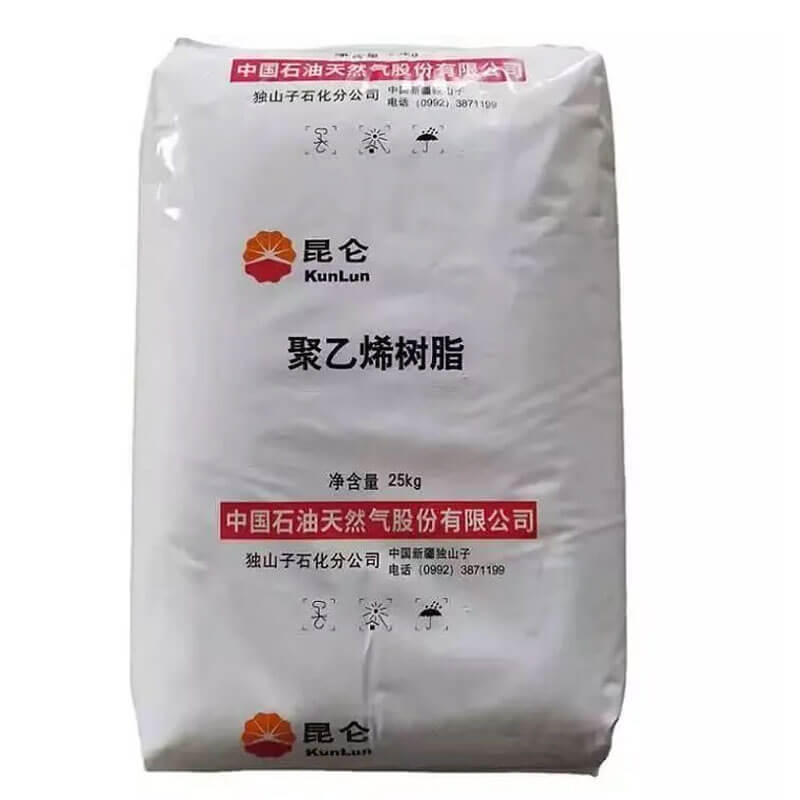
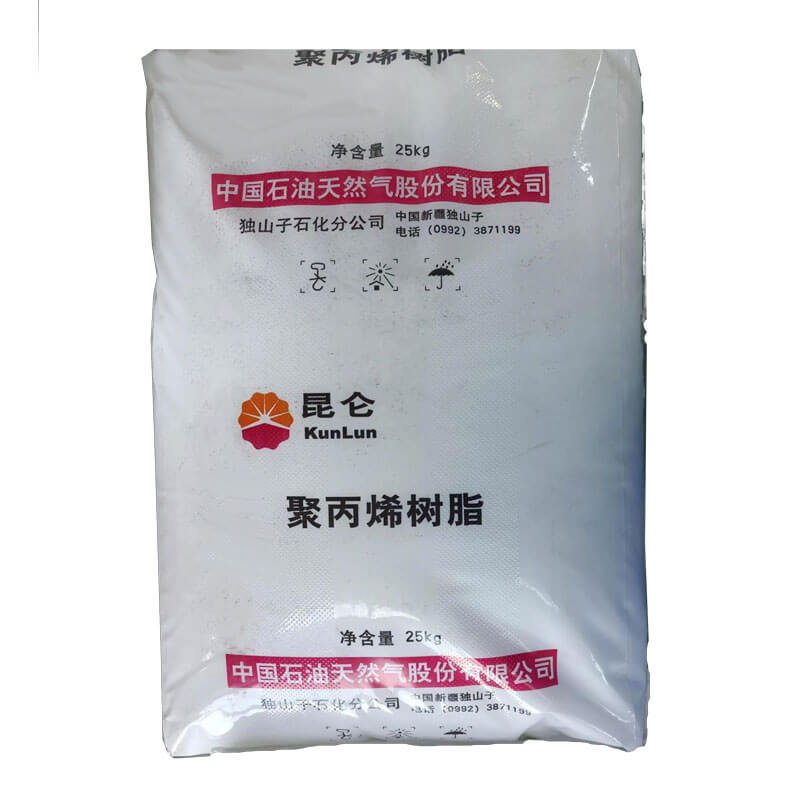
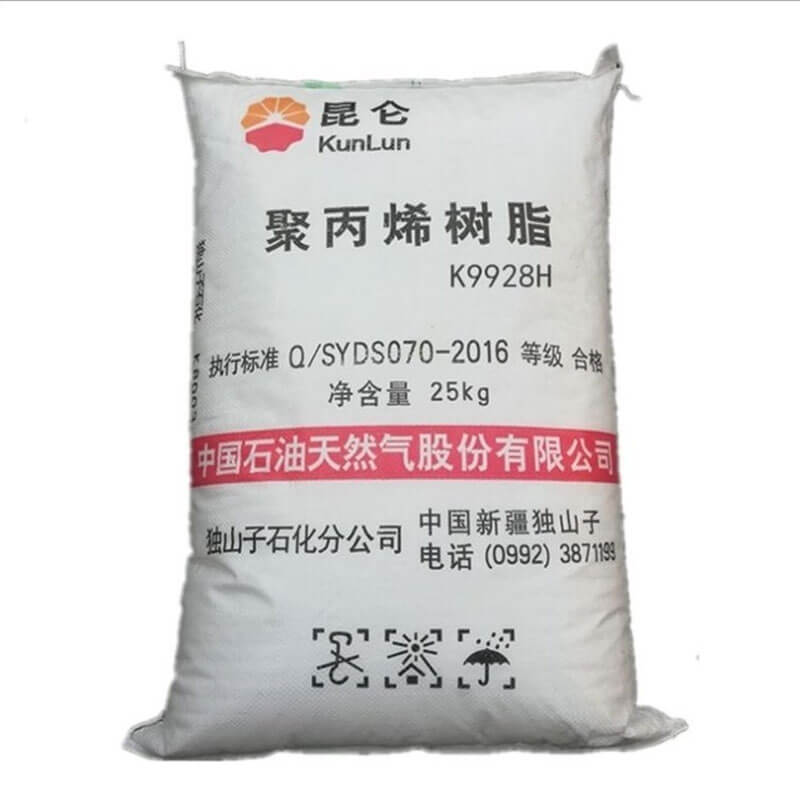
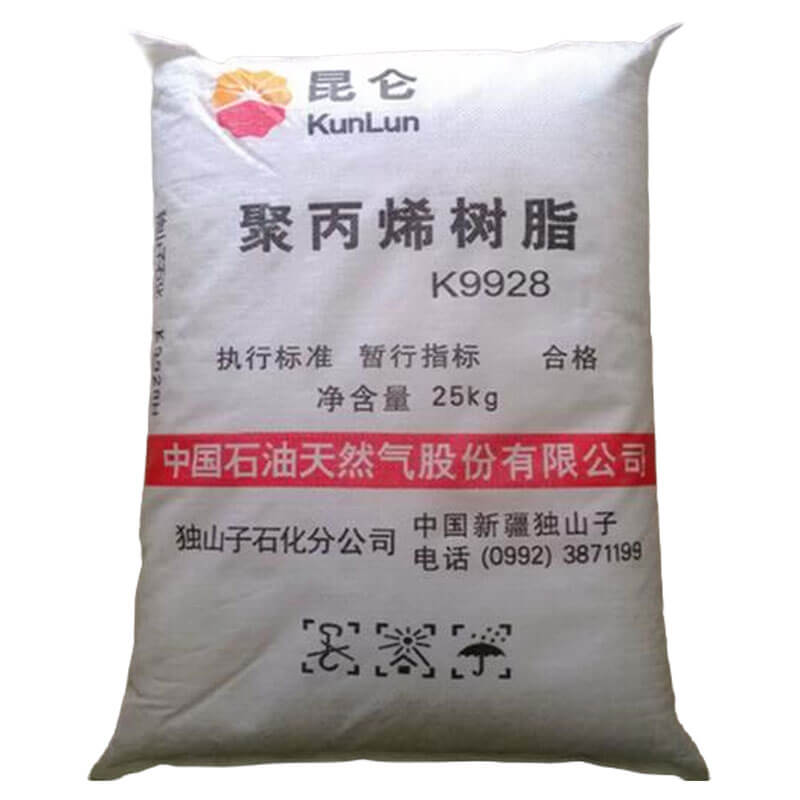
    Packing Polypropylene K9928 supplied as 25 kg bags, with packaging ensuring moisture protection and safe handling during transport and storage.
    Container Loading (20′ FCL) Polypropylene K9928 loaded as 20′ FCL in dry containers, secured properly, protected from moisture and contamination.
    Shipping Polypropylene K9928 is shipped as free-flowing pellets in 25 kg multilayer bags, FIBCs, or bulk containers. It is non-hazardous and not regulated as dangerous goods. Store away from heat, ignition sources, and direct sunlight; keep dry and avoid prolonged exposure to high temperatures.
    Storage Store Polypropylene K9928 in a cool, dry, well-ventilated area away from direct sunlight, heat sources, and open flames. Keep in its original, sealed packaging to prevent moisture pickup and contamination. Avoid contact with strong oxidizing agents. Maintain stable temperatures; prolonged exposure to high heat may cause degradation. Always follow the manufacturer’s Safety Data Sheet.
    Shelf Life Polypropylene K9928 has a typical shelf life of two years when stored in a cool, dry place away from direct sunlight.
    Application of Polypropylene K9928

    In automotive door lower trim and A/B-pillar lower substrates, Polypropylene K9928 is processed as a high-flow heterophasic impact copolymer with a nominal melt flow rate of 28 g/10 min measured under ISO 1133-1:2022 at 230 °C/2.16 kg and a density of 0.90 g/cm³ under ISO 1183-1:2019. Passenger-compartment flammability is evaluated according to GB 8410-2006 or ISO 3795:1989 horizontal burn-rate protocols; unfilled K9928 plaques at 3 mm nominal thickness typically exhibit burn rates below 100 mm/min, but color concentrates containing brominated or antimony compounds must be avoided because they can shift the combustion classification and invalidate OEM part approval. Emission and odor requirements for OEM interior applications are tested lot-by-lot using VDA 277 volatile organic compound analysis and VDA 278 fogging/odor assessment; when low-odor stabilizer packages are not confirmed on the certificate of analysis, the molder should isolate the lot for non-cabin applications. The compound is usually fed neat with 2–4 wt% color masterbatch and 0.2–0.5 wt% processing aid; if the door panel substrate requires flexural modulus above 1,400 MPa, 5–15 wt% talc masterbatch is added, but notched impact at -20 °C drops sharply once talc exceeds 10 wt%, so low-gloss visible parts should not exceed that threshold unless crack initiation at clip towers is acceptable. On production-scale injection machines between 1,200 t and 1,800 t clamp force, the melt temperature is maintained at 200–230 °C with barrel zones from 190 °C to 225 °C and mold temperature at 20–60 °C, with a preferred mold-temperature tolerance of ±3 °C to prevent textured-surface gloss variation. Large door panels are filled through sequential valve-gated hot runners with 3–5 drops; injection velocity profiles are staged so flow-front advance remains below 300 mm/s in areas with poor core venting, and clamp force is set at 3–5 tonnes per square inch of projected area. Standard PP reciprocating screws with 20:1 L/D and 2.2:1 compression ratio are adequate, and residence time above 230 °C should not exceed 5 min to avoid molecular weight reduction. Terminal components include door lower trim panels, B-pillar lower covers, scuff plates, glovebox outer shells, seat side shields, and center console side panels.

    What governs weld-line impact retention in thin-wall appliance fascia retainers?

    For non-electrical structural enclosures in home laundry and dishwashing appliances, the grade is specified where 0.8–2.5 mm nominal wall sections must sustain repeated load cycles without visible stress whitening. Mechanical strength requirements for moving-part guards and external enclosure panels are assessed under IEC 60335-1:2020; however, unfilled K9928 is not a UL 94 V-0 material and should not be placed in direct contact with live parts unless a glow-wire test under IEC 60695-2-11 is conducted on the specific thickness and color, because the glow-wire ignition temperature of unfilled PP is thickness-dependent and can fall below 550 °C. The formulation for appliance white goods uses neat K9928 plus 2–5 wt% color masterbatch; titanium dioxide concentrates are typically added at 3–4 wt%, but TiO₂ loadings above 5 wt% reduce melt fluidity and shorten flow length, requiring melt temperature increases of 5–10 °C to restore complete cavity filling. Injection molding is performed at melt temperatures of 210–240 °C and mold temperatures of 30–50 °C; hot-runner manifolds are operated below 40,000 s⁻¹ shear rate to limit thermo-oxidative generation of low-molecular-weight fractions. Hold pressure is set at 50–70% of peak injection pressure, and gate seal time is 5–7 s for 2 mm nominal wall. Weld lines at multi-gate intersections retain 60–75% of the solid-wall unnotched impact value if the melt front temperature at the meeting point stays above 210 °C; below that threshold, processors have observed knit-line surface cracking after 200–300 h of cyclic loading on washing machine top-frame test stands. Chemical resistance in dishwasher environments must be validated with ISO 175:2010 soak tests, particularly where chlorinated cleaning agents and elevated temperature are combined. Terminal products include top-load washer bezel frames, dryer door inner panels, dishwasher tub brackets, refrigerator door shelf end caps, and lower hatch covers.

    When returnable logistics containers are molded on 2,800–3,200 t clamp machines with flow paths exceeding 1,200 mm, Polypropylene K9928 is selected because its high-flow copolymer matrix permits filling of thick multi-rib structures without excessive injection pressure. Pallet and container mechanical performance is verified under ISO 8611-1:2011 for flat pallet deflection and racking load, ISO 2234:2000 for stacking compression, and ASTM D5276-19 for loaded-container free-fall drop; low-temperature drop survival is also checked at -20 °C on ribbed pallet corners because impact resistance in PP copolymers shifts from ductile to brittle within a narrow temperature band. Packaging heavy-metal limits are controlled under EU 94/62/EC, and REACH SVHC confirmation must be supplied for export shipments. Formulation typically consists of neat K9928 plus 2 wt% UV masterbatch and 0.5–1.0 wt% release agent; regrind from scrap runners and rejected parts may be added at 5–10 wt%, but when recycled content exceeds 30 wt%, low-temperature drop survival falls below the six-drop acceptance basis commonly applied to returnable crates. Processing uses melt temperatures of 220–250 °C, mold temperatures of 15–30 °C, injection pressures of 100–140 MPa, and pack/hold pressures of 60–80 MPa held until gate seal. Sequential valve gating with three to six drops is used for pallet decks; cooling time is set by wall thickness, and production logs show warpage is minimized when the moving half is held at 20 °C and the fixed half at 30 °C, drawing the part toward the core. Post-mold shrinkage for thick sections commonly falls between 1.2% and 1.8% within 24 h, so dimensional audits are delayed accordingly. Terminal products include folding crates, rigid pallet boxes, divider trays, automotive dunnage trays, and dolly bases.

    Application segmentRelevant standard or test methodTest condition or focusTypical acceptance basis
    Automotive interior trimGB 8410-2006 / ISO 3795:1989Horizontal burn rate3 mm plaque below 100 mm/min
    Household appliance fasciaIEC 60335-1:2020 / IEC 60695-2-11Mechanical guards, glow wireValidated at specific thickness and color
    Returnable logisticsISO 8611-1:2011 / ISO 2234:2000 / ASTM D5276-19Pallet deflection, stacking, loaded dropSix-drop low-temperature corner impact common
    Outdoor power equipmentUL 82 / IEC 60335-2-77:2019Electrical garden appliance enclosureImpact and weathering validation
    Office furnitureANSI/BIFMA X5.1-2017 / EN 1335-2:2018Chair shell load and fatigueCrack-free cycles at rib junctions
    E-mobility bracketsIEC 62619:2022 / UL 746CBattery safety, polymeric enclosureNon-live-part bracket wall integrity

    When outdoor power equipment housings require low-temperature crack arrest, gate location determines brittle-fracture response

    Crack arrest at -20 °C is not governed solely by the resin impact modifier concentration; in K9928 moldings for string trimmer guards and leaf blower back housings, the orientation of polymer chains near the gate creates a high-strength anisotropic region that can shift brittle failure to flow-front meeting lines. Electrical garden appliance enclosures are evaluated under UL 82 for product safety and under IEC 60335-2-77:2019 for pedestrian-controlled lawnmowers where applicable; outdoor UV weathering is assessed using ISO 4892-2:2013 cycle A xenon-arc exposure, with color difference and impact retention measured after 1,000 h and 2,000 h. The formulation for such components uses K9928 with 0.5–1.5 wt% hindered amine light stabilizer masterbatch and 2–3 wt% carbon black or colored UV-stabilized concentrate; if the housing is painted or coated, a primer adhesion check under ISO 2409:2020 cross-cut is required because low-surface-energy PP does not retain coatings without polar pre-treatment. Injection molding parameters include melt temperature 210–230 °C, mold temperature 25–50 °C, and textured cavity surfaces with 25–30 µm grain depth to mask flow marks and reduce visible scratches in field use. Gate location is placed away from high-bending stress regions and away from screw bosses subject to impact; when multiple gates cannot be avoided, the weld line should be strengthened by increasing mold temperature locally to 45–50 °C and reducing injection velocity to allow molecular diffusion across the meeting front. Fuel and oil contact must be checked under ISO 175:2010, because aromatic hydrocarbons can reduce impact toughness after prolonged immersion. Terminal products include string trimmer guards, blower housings, pruner handle clamshells, battery covers, and engine cover supports.

    Office chair seat shells and stackable seating components molded from K9928 are subjected to cyclic load protocols that expose long-term creep and fatigue behavior more than short-term tensile strength. Contract furniture mechanical safety is verified under ANSI/BIFMA X5.1-2017 and EN 1335-2:2018, specifically for backrest strength, seat load capacity, and durability cycles; for stackable chairs, the shell must survive drop tests and stacking compression without visible cracking at rib junctions. The formulation is usually neat K9928 with 2–5 wt% color masterbatch; glass fiber reinforcement is not recommended above 10 wt% because the accompanying loss of ductility can cause brittle corner fracture during chair-shell impact tests. Processing uses injection molding with melt temperatures of 220–240 °C, mold temperatures of 30–60 °C, and multiple gates to balance flow into thick rim sections; gas-assisted injection is used selectively in armrest cores and seat-pan ribs to reduce sink marks without increasing clamp force, and pack/hold pressure is maintained until the gate freezes. Ribs are designed at 40–60% of nominal wall to avoid excessive sink and internal voids. Flow-induced skin-core orientation in thick shell sections can produce differential shrinkage; processors compensate by keeping mold halves within ±5 °C and by allowing 24 h post-mold conditioning before final dimensional audit. Terminal products include office chair seat shells, backrest shells, armrest inserts, under-seat structural brackets, and stacking stool seats.

    SegmentMelt temperature rangeMold temperature rangeCritical processing boundary
    Automotive interior trim200–230 °C20–60 °CMold tolerance ±3 °C to avoid gloss drift
    Thin-wall appliance fascia210–240 °C30–50 °CWeld-line melt front > 210 °C for impact retention
    Returnable logistics220–250 °C15–30 °CMoving/fixed half differential 10 °C to control warpage
    Outdoor power equipment210–230 °C25–50 °CGate away from stress risers; local mold temp 45–50 °C for weld line
    Office furniture220–240 °C30–60 °CPack/hold until gate freeze; 24 h conditioning for dimensional audit
    E-mobility brackets220–245 °C30–60 °CHold pressure to prevent voids in 1.8–2.5 mm walls

    E-mobility battery carrier brackets and live-part spacing constraints

    The grade is limited to secondary structural components in e-mobility battery packs where the polymeric part is not the primary flame barrier or live-part insulator. Battery system safety is governed by IEC 62619:2022 for industrial lithium cells and batteries, while polymeric enclosures used in electrical equipment are assessed under UL 746C; K9928 must be confined to carrier brackets, cell holder frames, and wire guides more than 13 mm from unprotected live terminals unless a specific flame barrier is interposed. Published data for K9928 under UL 94 at e-mobility wall thicknesses is limited, so end users must validate the specific color and thickness rather than rely on a generic HB classification. The formulation for these components uses neat K9928 or K9928 with 2–4 wt% color masterbatch; no flame-retardant package is available in the standard grade, and any attempt to add halogenated FR masterbatch above 5 wt% significantly reduces low-temperature impact and complicates weld-line strength. Injection molding is performed at melt temperatures of 220–245 °C and mold temperatures of 30–60 °C to increase crystalline structure and dimensional stability; wall thickness is maintained at 1.8–2.5 mm to balance stiffness and impact, with weld lines placed away from snap-fit retention features. Vent depth is kept at 0.01–0.02 mm to prevent flash without trapping gas. Production-scale molding of battery brackets on 300–600 t machines requires close monitoring of hold pressure, because insufficient packing at gate-near regions creates voids that reduce ISO 6603-2:2023 puncture impact energy and can lead to field failure during cell insertion. Terminal products include side spacer brackets, cell holder frames, wire guides, busbar support rails, and charger base supports.

    Free Quote

    Competitive Polypropylene K9928 prices that fit your budget—flexible terms and customized quotes for every order.

    For samples, pricing, or more information, please contact us at +8618136850665 or mail to sales4@ascent-chem.com.

    We will respond to you as soon as possible.

    Tel: +8618136850665

    Email: sales4@ascent-chem.com

    Inquiry

    Get Free Quote of PetroChina Dushanzi Petrochemical Company

    Flexible payment, competitive price, premium service - Inquire now!

    Certification & Compliance
    More Introduction

    Polypropylene K9928 is supplied as a heterophasic impact copolymer in which a continuous isotactic polypropylene matrix encapsulates dispersed ethylene-propylene rubber microdomains. The grade designation K9928 denotes a high-flow injection moulding feedstock; its nominal melt flow rate is 28 g/10 min when determined at 230 °C under 2.16 kg load according to ISO 1133-1:2022. Density at 23 °C is 0.900 g/cm³ to 0.910 g/cm³ by ISO 1183-1:2019. Tensile yield stress by ISO 527-2:2012 is typically 25 MPa to 27 MPa, with elongation at break above 50 %. Notched Izod impact at 23 °C by ISO 180:2019 is reported at 10 kJ/m² to 13 kJ/m², while flexural modulus values in supplier technical bulletins span 1,100 MPa to 1,300 MPa under ISO 178:2019 at 2 mm/min crosshead speed. The product differs from high-stiffness homopolymer grades by replacing some matrix crystallinity with rubber-phase toughening, which lowers tensile yield strength but increases multiaxial impact resistance. It differs from random copolymers by retaining higher propylene-sequence crystallinity in the matrix phase, which preserves heat deflection and mould shrinkage control in thin-wall parts.

    Does K9928 Require Predrying Before High-Shear Injection Molding?

    At ambient storage below 60 % RH and with regrind fractions below 20 wt%, K9928 is processed without mandatory predrying on single-stage reciprocating-screw machines. Where silo or floor storage exceeds 60 % RH or regrind content increases above 20 wt%, predrying at 80 °C for 2 h to 4 h in a desiccant dryer having a dew point below -30 °C is recommended to reduce silver streaks and surface splay. Production-scale observations on 180-tonne to 450-tonne hydraulic injection moulding lines show screw recovery time increases of 8 % to 15 % when cold regrind is introduced without dryer residence. Barrel temperature profiles from feed to nozzle are commonly set at 200 °C, 220 °C, 230 °C, and 230 °C; melt temperatures above 250 °C accelerate molecular weight reduction and increase yellowness index by more than 2 units during residence times above 10 min. Back pressure should be maintained between 0.5 MPa and 1.0 MPa to disperse the ethylene-propylene rubber phase without excessive shear heating. Screw surface speed of 80 min⁻¹ to 140 min⁻¹ on a 20:1 L/D to 24:1 L/D general-purpose screw with compression ratio 2.0:1 to 2.5:1 is typical.

    Automotive interior substrates, appliance housings, and industrial crates are typical conversion routes for K9928 because the heterophasic morphology suppresses crack propagation at gate vestige and weld-line regions. In instrument panel carrier prototypes moulded at 2.5 mm nominal wall thickness, Charpy notched impact energy at 23 °C has been recorded at 10 kJ/m² to 14 kJ/m² using ISO 179-1:2010. At -20 °C, the same grade retains 4 kJ/m² to 5 kJ/m² in supplier documentation, sufficient for short-duration low-temperature handling but not for continuous sub-zero load-bearing; published data for this specific configuration is limited and finished-part validation is required. Laser marking contrast is acceptable only after additive masterbatch addition; unpigmented K9928 exhibits low contrast at 1064 nm wavelength. Weld-line strength in unmodified K9928 is approximately 20 % lower than the bulk tensile yield when moulded with cold runner systems; hot runner valve gating and melt temperatures above 225 °C reduce this differential.

    Comparative Performance with Homopolymer and Random Copolymer Feedstocks

    The differentiation between K9928 and a high-stiffness homopolymer feedstock is most apparent in low-temperature impact behaviour and tensile modulus trade-off. The table below presents typical comparative values from supplier technical bulletins and independent conversion studies, not a single-lot specification.

    Property Test Method K9928 Homopolymer PP Random Copolymer PP
    Melt flow rate, 230 °C, 2.16 kg ISO 1133-1:2022 28 g/10 min 812 g/10 min 610 g/10 min
    Tensile yield stress ISO 527-2:2012 2527 MPa 3437 MPa 2224 MPa
    Flexural modulus ISO 178:2019 1,1001,300 MPa 1,4501,600 MPa 850950 MPa
    Charpy notched impact, 23 °C ISO 179-1:2010 1014 kJ/m² 24 kJ/m² 57 kJ/m²
    Charpy notched impact, -20 °C ISO 179-1:2010 45 kJ/m² 1.01.5 kJ/m² 1.52.0 kJ/m²
    Heat deflection temperature, 0.45 MPa ISO 75-2:2013 8590 °C 100105 °C 7075 °C

    K9928 occupies a mid-stiffness, high-toughness position: it sacrifices roughly 25 % to 30 % of homopolymer flexural modulus but improves room-temperature Charpy notched impact energy by a factor of 3 to 5. Compared with random copolymers, K9928 shows higher crystallinity and better dimensional stability at elevated ambient temperatures; however, random copolymer grades exhibit superior optical clarity and lower seal initiation temperatures. The ethylene-propylene rubber content in K9928 is typically in the 6 wt% to 10 wt% range based on extractables and FTIR analysis in published compounding literature, though the exact comonomer distribution is supplier-confidential.

    When Impact Copolymerization Alters Crystallization Half-Times

    Differential scanning calorimetry at 10 K/min under ISO 11357-3:2018 shows a polypropylene matrix melting peak at 162 °C to 166 °C and a secondary ethylene-propylene glass transition below -40 °C. Crystallization half-times measured at 110 °C are shorter than those of random copolymers, typically 4 min to 6 min, which permits fast part ejection in high-cavity tooling. The dispersed rubber domains act as stress concentrators for shear yielding; however, domain coalescence observed above 250 °C or after residence times above 15 min reduces notched impact values by 30 % to 40 % in repelletized material. Screw configurations with aggressive mixing elements should not exceed 22:1 L/D for K9928 because local shear heating oxidizes the rubber phase and generates free radicals that shift melt viscosity downward. Barrier screws with 20:1 L/D to 24:1 L/D and compression ratio 2.0:1 to 2.5:1 are preferred over high-compression general-purpose screws. Cooling time in 2.0 mm wall sections is typically 8 s to 12 s at 20 °C mould temperature.

    Rotational rheometry at 200 °C in oscillatory frequency sweep from 0.01 rad/s to 100 rad/s reveals shear thinning with a power-law index of 0.35 to 0.45 and zero-shear viscosity near 1,200 Pa·s to 1,800 Pa·s. The rubber-phase volume increases storage modulus at low frequency, producing a plateau in tan delta between 0.1 rad/s and 1 rad/s. This characteristic complicates direct comparison with homopolymer melts for gate sizing; mould-filling simulation packages should use Cross-WLF viscosity coefficients derived from actual capillary data rather than generic polypropylene coefficients.

    Post-mould shrinkage in K9928 is anisotropic; longitudinal shrinkage is 1.2 % to 1.6 % and transverse shrinkage is 1.4 % to 1.8 % after 48 h at 23 °C using ISO 294-4:2018. Glass-reinforced variants, if selected, reduce flow-direction shrinkage to 0.3 % to 0.5 %, but the unfilled K9928 is not formulated for exacting flatness without post-mould fixturing. Parts moulded at 80 °C mould temperature show lower warpage but longer cycle; therefore, mould temperature selection is a trade-off between dimensional stability and production throughput.

    Plant trial records for thin-wall container production indicate that K9928 requires careful control of cushion and hold pressure to avoid sink marks at bosses and ribs. Packing pressure should be 25 % to 50 % of injection pressure, with hold time set to gate-seal time rather than arbitrary cooling time. Mould temperature is optimal between 15 °C and 40 °C; lower temperatures reduce visual gloss but shorten cycle time, while higher temperatures improve weld-line strength but increase cycle time by 0.5 s to 1.0 s per °C above 40 °C in 2 mm walls. When moulding with hot runner systems, manifold temperature should be limited to 230 °C to 240 °C; greater settings induce polymer degradation at gate tips. Gate size should not fall below 0.8 mm for thin-wall flow lengths exceeding 150 mm, because high shear rates above 50,000 s⁻¹ increase melt temperature and cause delamination of the rubber phase.

    Regulatory and Food-Contact Boundaries for K9928

    As a heterophasic polypropylene, K9928 falls within the olefin polymers class defined by FDA 21 CFR 177.1520. A specific lot can comply with EU 10/2011 for food-contact applications only when the supplier has selected the additive package and declared overall migration below 10 mg/dm²; the base resin itself does not automatically confer compliance. Heavy metal and brominated flame retardant restrictions under RoHS Directive 2011/65/EU are met in supplier declarations for standard production lots. REACH candidate list screening shows no intentionally added SVHC above 0.1 wt% in the unfilled grade.

    Standard/Regulation Scope K9928 Status
    FDA 21 CFR 177.1520 Olefin polymers for food contact Compliant only with supplier-specified additive package and end-use conditions
    EU 10/2011 Plastic materials in contact with food Compliance requires lot-specific overall migration < 10 mg/dm²
    RoHS Directive 2011/65/EU Pb, Hg, Cd, Cr(VI), PBB, PBDE Pass in standard supplier declarations
    REACH SVHC candidate list No intentionally added SVHC above 0.1 wt%

    Within the impact copolymer class, K9928 is distinguished from lower-flow impact copolymers having MFR near 12 g/10 min by its higher nominal MFR, which supports multicavity filling at reduced injection pressure. The trade-off is lower impact strength at equivalent wall thickness because higher melt flow grades contain lower molecular weight tails that reduce chain entanglement density. A conversion study comparing 2.0 mm spiral flow mouldings showed K9928 fills 10 % to 15 % longer flow lengths at 190 °C melt temperature than an MFR 12 g/10 min impact copolymer, while weld-line Charpy impact drops by 8 % to 12 %. Selection should therefore prioritise K9928 when filling pressure or cycle time is the governing constraint, and lower-flow impact copolymers when low-temperature toughness at maximum part thickness is critical.